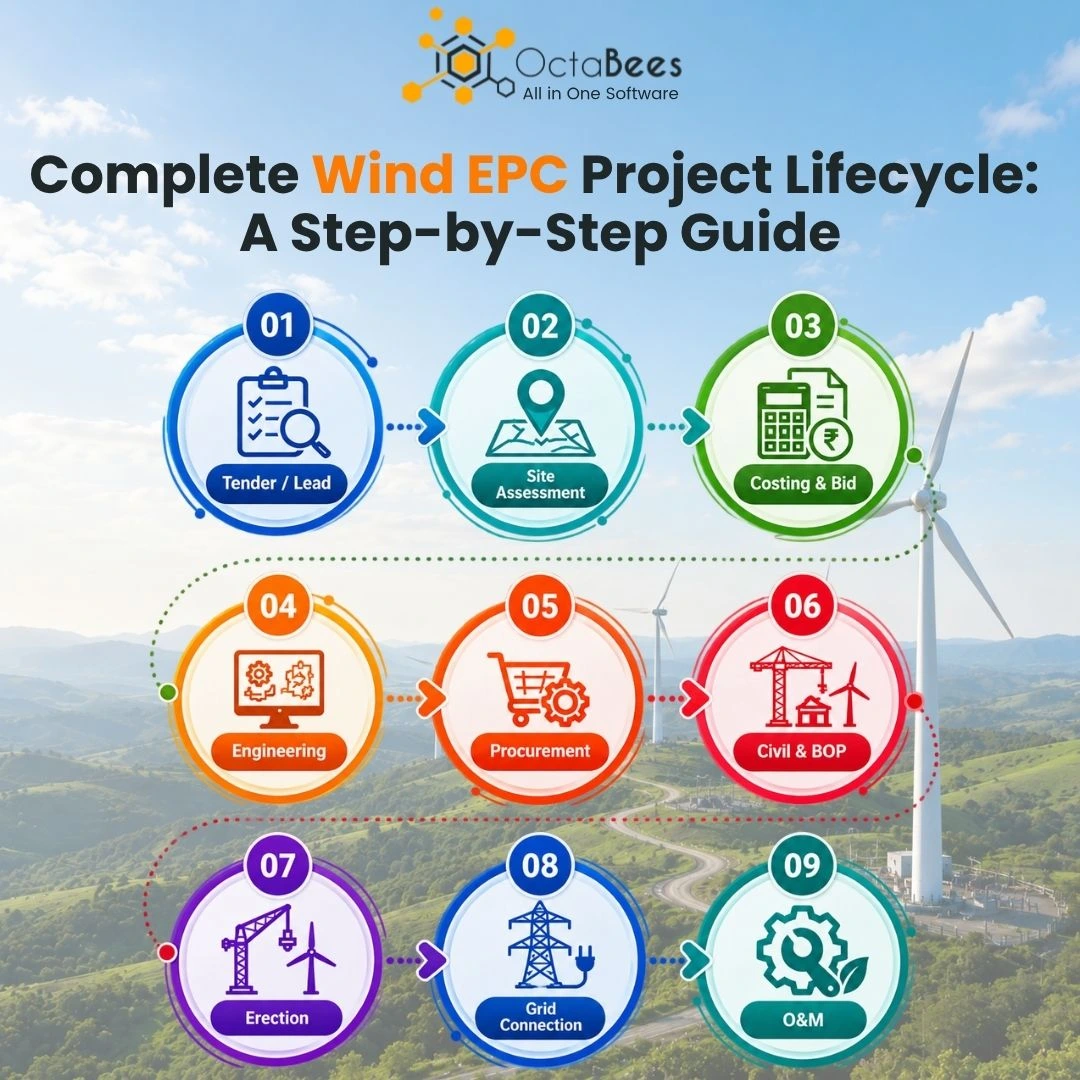

Wind energy projects involve numerous activities that must be completed in the right sequence to…
Engineering, Procurement, and Construction (EPC) projects involve multiple teams, contractors, suppliers, documents, materials, budgets, and deadlines. Managing these moving parts through spreadsheets and disconnected applications can make it difficult to maintain project visibility and control. A purpose-built ERP platform brings these functions together in one connected environment. Modern ERP Software can help EPC companies manage project planning, procurement, inventory, finance, quality, safety, and field operations through integrated workflows. However, not every ERP platform offers the same capabilities. Before selecting a solution, EPC businesses should evaluate whether it supports the practical requirements of complex project execution. The following features can help organizations improve coordination, control project costs, and make project information easier to access.
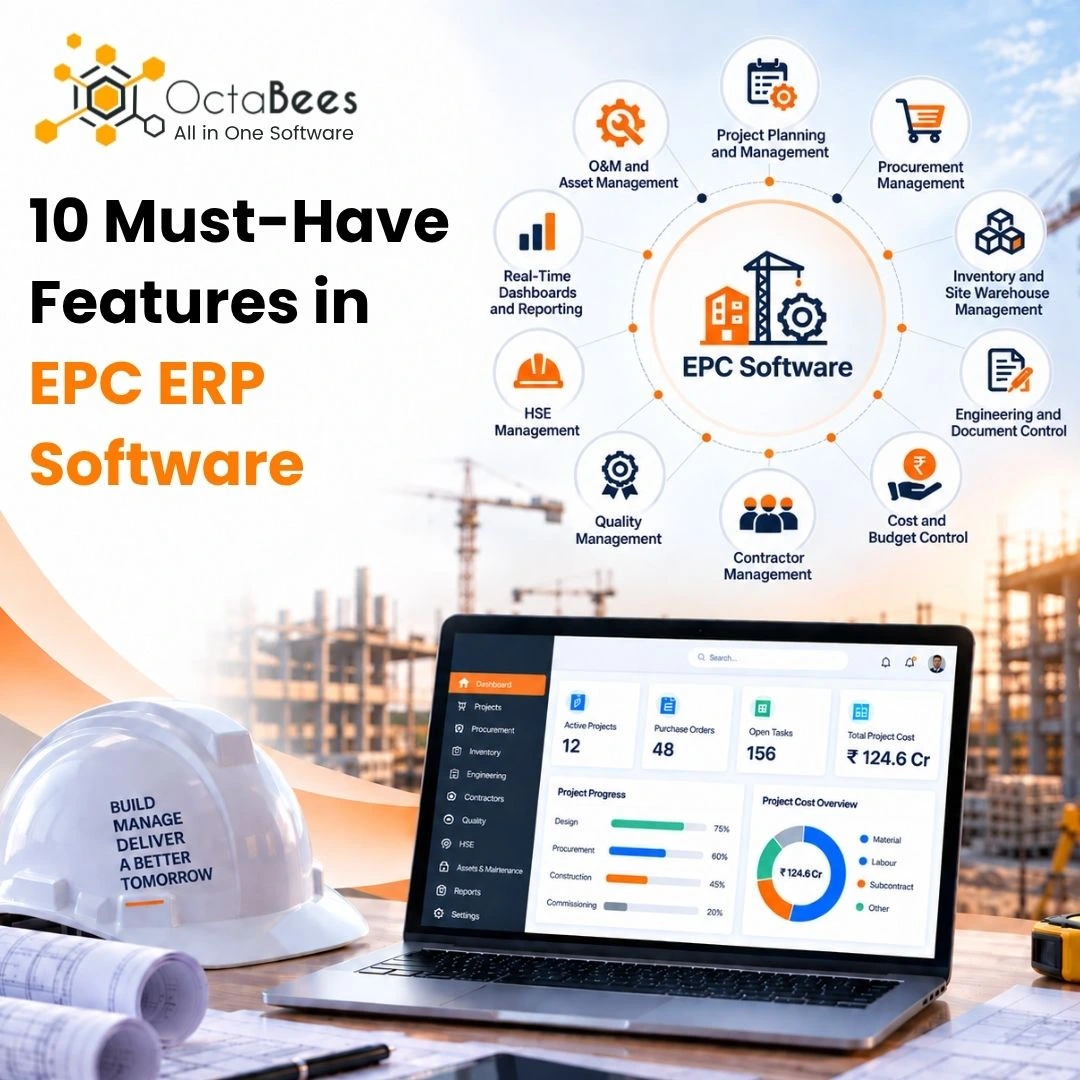
10 Must-Have Features in EPC ERP Software
Choosing the right ERP Software for EPC operations means looking beyond basic business functions. The system should connect project planning, procurement, inventory, engineering, finance, contractors, quality, safety, reporting, and O&M to support the complete project lifecycle.
1. Project Planning and Management
Effective project management software should support schedules, milestones, resources, budgets, and task tracking. This gives project teams a centralized view of planned and actual progress.
2. Procurement Management
EPC projects depend heavily on timely material and equipment procurement. ERP Software should connect purchase requisitions, RFQs, comparative statements, purchase orders, approvals, and vendor tracking in one workflow.
3. Inventory and Site Warehouse Management
Multi-site inventory tracking helps teams monitor material availability across project locations. Features such as GRN, barcode scanning, stock ledgers, material issues, and reorder levels can improve inventory control.
4. Engineering and Document Control
Drawings, specifications, BOQs, and technical documents frequently undergo revisions. Engineering document management should provide version control, approvals, and easy access to the latest information.
5. Cost and Budget Control
Project profitability depends on controlling costs throughout execution. An EPC project management system should compare budgets with actual costs and provide visibility into procurement, labour, material, and project expenses.
6. Contractor Management
EPC companies often coordinate multiple contractors across work packages. Contractor work orders, progress tracking, material issues, billing, and performance records can be managed through an integrated workflow.
7. Quality Management
Digital QA/QC tools can help teams manage inspection checklists, test certificates, NCRs, CAPA, hold points, and quality approvals while maintaining audit trails.
8. HSE Management
Safety management is essential for construction and industrial projects. HSE management software should support incident and near-miss reporting, HIRA/JSA, PPE tracking, safety observations, and compliance records.
9. Real-Time Dashboards and Reporting
Project managers need timely information to make decisions. Role-based dashboards, KPI tracking, drill-down reports, and scheduled MIS can provide visibility into project performance.
10. O&M and Asset Management
The project lifecycle continues after construction. Asset registers, preventive maintenance, breakdown management, warranties, service history, spare parts, and performance monitoring help support O&M management.
Why These Features Matter for EPC Companies?
The value of an ERP platform is not simply the number of modules it contains. Integration between those modules is equally important. When ERP Software connects procurement, inventory, project management, finance, quality, and field operations through shared data, teams can reduce information gaps and improve coordination.
| EPC Requirement | Important ERP Capability | Result |
| Project execution | Schedule & progress tracking | Better project visibility |
| Procurement | PR-to-PO workflow | Controlled purchasing |
| Material management | Multi-site inventory | Improved stock control |
| Financial control | Budget vs. actuals | Better cost visibility |
| Quality & safety | QA/QC and HSE workflows | Stronger compliance |
How to Choose the Right EPC ERP Software?
Before implementation, businesses should evaluate the platform against their actual project workflows. Look for configurable approvals, multi-project support, mobile access for field teams, reporting capabilities, integrations, scalability, and user-friendly interfaces. ERP Software should fit the organization’s processes rather than forcing teams into complicated workarounds.
Looking to improve EPC project control with integrated digital workflows? Contact us to explore ERP solutions aligned with your project requirements.
How ERP Connects the EPC Project Lifecycle?
One of the biggest advantages of ERP Software for EPC companies is the ability to connect different stages of a project instead of managing them as separate activities. Data captured during estimation and procurement can flow into project execution, inventory, finance, quality, and handover processes.
For example, an approved purchase requisition can move through the RFQ and purchase order workflow, while received materials can be linked to inventory and project consumption. Similarly, project costs can be connected with budgets to provide better EPC project cost control.
This connected approach can help teams:
- Track project progress against planned schedules
- Connect procurement with material requirements
- Monitor material movement across project sites
- Link project expenses with budgets
- Maintain engineering and quality documentation
- Coordinate contractors and field activities
- Generate management reports from centralized data
What to Look for in an EPC ERP System?
Selecting an EPC ERP system requires more than checking whether a platform offers individual modules. The system should support the way EPC projects are actually planned, executed, monitored, and handed over.
Businesses should consider whether the ERP Software provides configurable workflows, multi-project and multi-site support, role-based access, mobile capabilities, reporting, and integration with existing financial or business systems.
It is also important to evaluate scalability. An ERP that works for a small project should be able to support larger project portfolios, additional users, contractors, locations, and increasingly complex workflows without creating disconnected processes.
Before implementation, organizations can assess:
- Project and workflow requirements
- Procurement and inventory processes
- Existing finance and accounting integrations
- Field and mobile requirements
- Reporting and dashboard needs
- Data migration and user access
- Scalability and future business requirements
Frequently Asked Questions
EPC ERP software is an integrated business management platform designed to connect functions such as project management, procurement, inventory, finance, engineering, quality, safety, and operations.
Key features include project management, procurement, inventory, cost control, contractor management, document control, QA/QC, HSE, reporting, and O&M management.
ERP connects project budgets with actual procurement, inventory, labour, and other expenses, allowing teams to monitor costs and identify variances more efficiently.
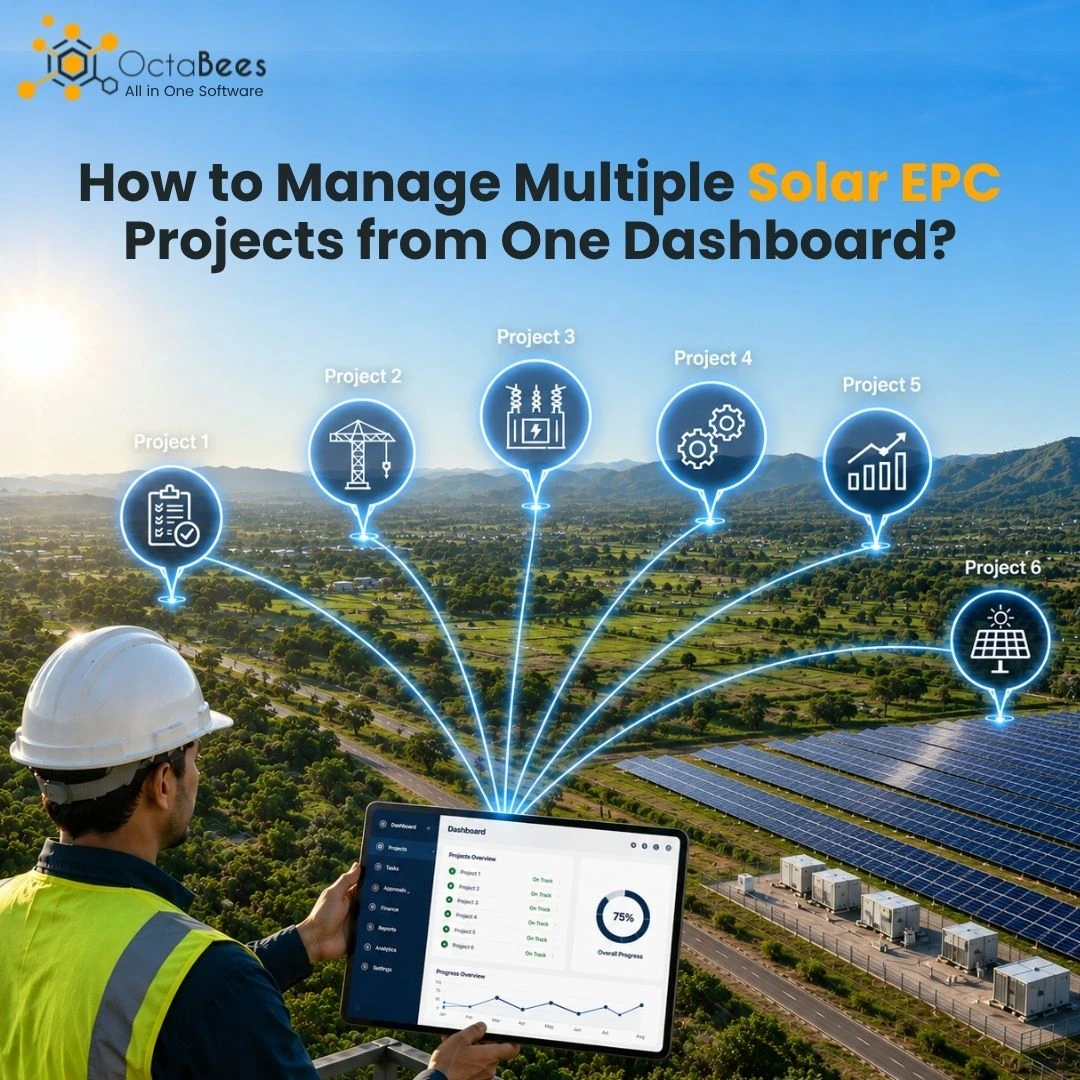
Yes. Many ERP platforms provide multi-project and multi-site capabilities, allowing organizations to monitor schedules, budgets, resources, materials, and performance across projects.
ERP platforms can support field operations through mobile workflows for activities such as daily progress reporting, material receipts, inspections, safety reporting, and task updates.
Conclusion
EPC projects require coordination across engineering, procurement, construction, contractors, suppliers, finance, and field teams. A disconnected technology environment can make this coordination more difficult as project complexity increases. ERP Software brings key business and project processes into a centralized platform, helping organizations improve visibility, standardize workflows, and control resources more effectively. Features such as procurement automation, inventory tracking, project cost management, document control, QA/QC, HSE, reporting, and O&M can support the complete EPC lifecycle. When evaluating an ERP solution, companies should focus on integration, scalability, usability, and alignment with their actual project processes rather than selecting a system based only on its feature list.
Related Posts