
Cost management is one of the most important aspects of renewable energy EPC execution. Large…
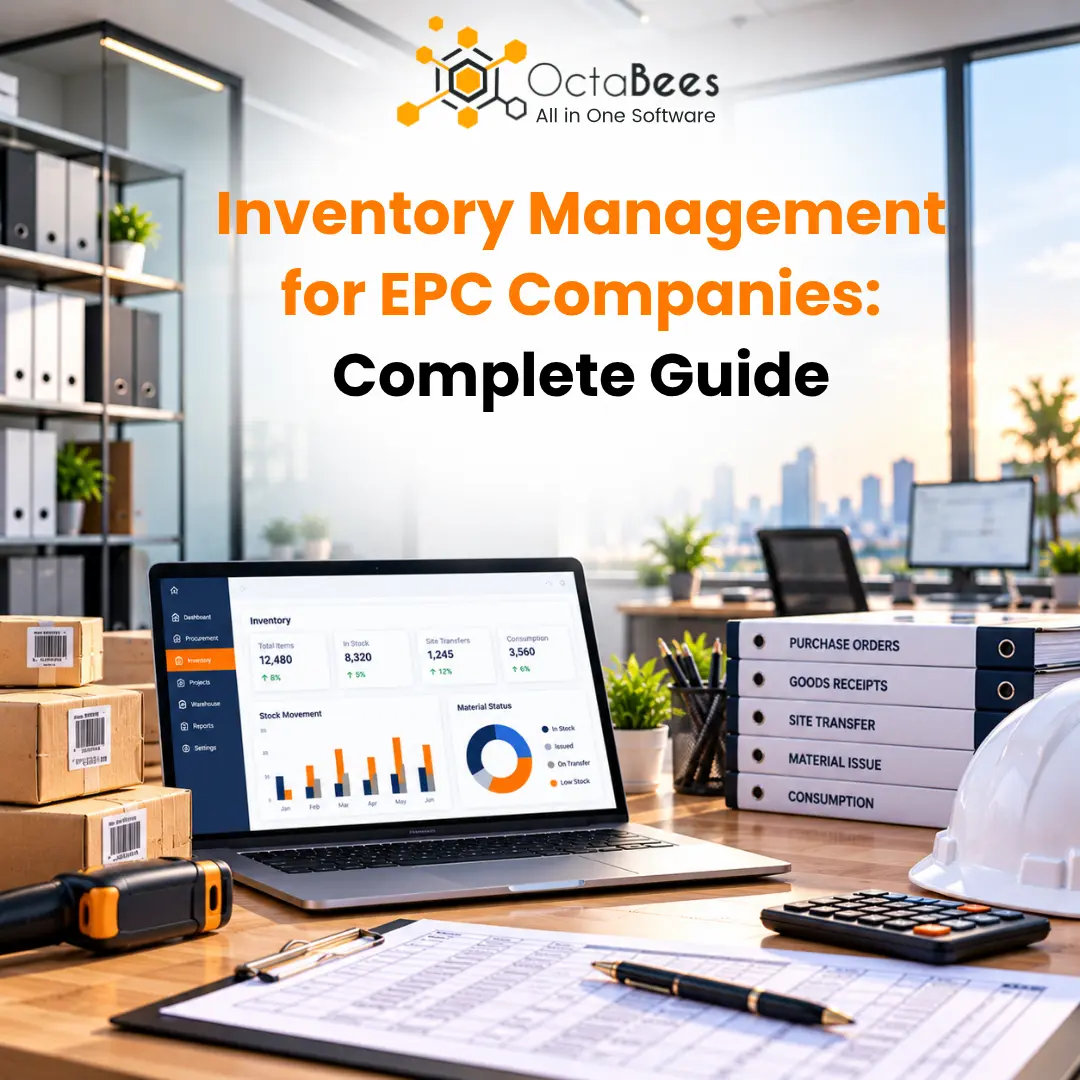
EPC companies handle large volumes of materials, equipment, components, and consumables across engineering, procurement, construction, and commissioning activities. When inventory is not properly tracked, companies can face material shortages, excess stock, project delays, wastage, and inaccurate cost information. Effective EPC Management therefore requires inventory processes that connect purchasing, warehouses, project sites, contractors, and finance. From purchase orders and goods receipts to material allocation and consumption, every movement should be traceable. A structured inventory management approach gives project teams better visibility into what is available, where it is located, what has been issued, and what is still required. This becomes particularly important for EPC companies managing multiple projects and geographically distributed sites.
Why Inventory Management Matters in EPC Projects?
Unlike standard businesses, EPC companies often manage project-specific materials that must reach the right location at the right time. Effective EPC Management becomes important when delayed or incorrect material allocation can directly affect project schedules, procurement activities, and site execution.
Effective inventory management helps companies:
- Reduce material shortages and excess stock
- Track materials across warehouses and project sites
- Improve procurement planning
- Minimize material wastage and losses
- Maintain accurate project cost information
- Improve coordination between procurement and site teams
Key Inventory Challenges for EPC Companies
EPC projects can involve thousands of individual items and multiple storage locations. Managing these materials efficiently through EPC Management becomes challenging when teams rely on manual spreadsheets and disconnected records, making it difficult to maintain accurate inventory information.
Common challenges include:
- Multi-site stock tracking
- Material identification and traceability
- Delayed goods receipt updates
- Unplanned material consumption
- Stock discrepancies
- Contractor material management
- Slow reconciliation between physical and system stock
How ERP Supports EPC Inventory Management?
An integrated ERP platform can connect procurement, inventory, projects, and finance through a single workflow. This allows teams to track material movements from purchase through site consumption.
For example, a typical workflow can include:
Purchase Order → GRN → Warehouse Receipt → Site Transfer → Material Issue → Consumption
With this connected process, EPC Management teams can maintain better visibility into stock availability and project material requirements.
Important Inventory Features for EPC Companies
| Requirement | ERP Capability | Benefit |
| Material receipt | GRN management | Accurate stock updates |
| Multi-site inventory | Location-wise tracking | Better stock visibility |
| Material movement | Transfer management | Traceable movement |
| Site consumption | Material issue | Project-level tracking |
| Identification | Barcode/serial tracking | Better traceability |
| Stock monitoring | Real-time dashboards | Faster decisions |
Best Practices for Better EPC Inventory Control
EPC companies can strengthen inventory management by establishing standardized processes across warehouses and project sites. Integrating these practices into EPC Management helps teams maintain consistent material records, improve stock visibility, and coordinate inventory activities more effectively.
Key practices include:
- Maintain standardized material masters
- Link materials with projects and work packages
- Record every receipt, transfer, and issue
- Use barcode or serial tracking where appropriate
- Monitor slow-moving and excess inventory
- Reconcile system records with physical stock regularly
Looking to improve material visibility across your EPC operations? Contact us to explore integrated inventory and project management solutions.
Benefits of Integrated Inventory Management
A connected inventory system can improve both operational and financial control. When integrated with EPC Management, project teams can see material availability before raising new purchase requirements, while management can understand inventory value and consumption across projects.
This supports better procurement planning, reduces avoidable purchases, improves material traceability, and strengthens overall project execution.
Frequently Asked Questions
Inventory management in EPC involves tracking materials, equipment, components, and consumables from procurement and receipt through storage, site transfer, issue, and project consumption.
It helps prevent material shortages, excess stock, losses, wastage, and project delays while improving visibility into material availability and project costs.
Yes. ERP systems can provide location-wise inventory tracking, enabling companies to monitor stock across warehouses, project sites, and other storage locations.
ERP can record material receipts, transfers, issues, serial numbers, and consumption, creating a digital trail for materials throughout the project lifecycle.
Accurate inventory tracking helps reduce unnecessary purchases, material losses, excess stock, and unplanned procurement, supporting better project cost control.
Conclusion
Effective inventory management is an essential part of successful EPC project execution. Materials must be available when required while avoiding unnecessary stock accumulation, losses, and procurement delays. Integrated systems can connect purchasing, warehouses, project sites, contractors, and finance to provide a clearer view of material movements and consumption. By incorporating inventory workflows into EPC Management, companies can improve material traceability, procurement planning, stock control, and project visibility. Standardized processes, real-time information, and centralized records can help EPC teams make better decisions throughout the project lifecycle. For companies managing multiple projects, a connected inventory approach can also provide greater control over resources and support more efficient project delivery.
Related Posts