

EPC projects involve multiple interconnected activities, stakeholders, contractors, suppliers, technical requirements, and site conditions. From…
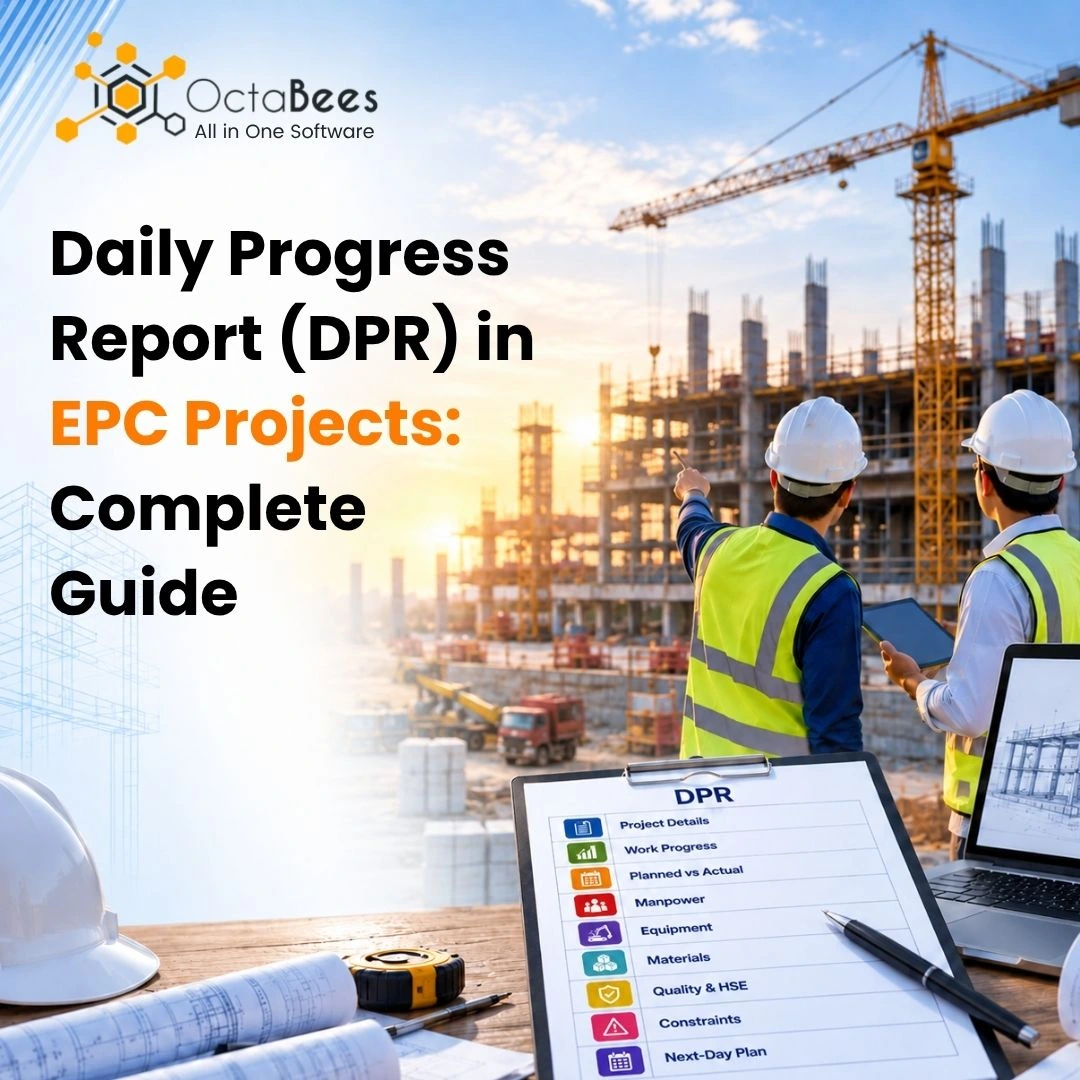
Managing large-scale construction work requires more than periodic status meetings. Site activities can change daily due to material availability, manpower, weather, contractor performance, engineering approvals, or equipment issues. Without accurate reporting, small problems can quickly become schedule delays. A Daily Progress Report (DPR) helps project teams capture what actually happened on site and compare it with planned activities. For complex EPC Projects, this daily visibility is essential for keeping engineering, procurement, and construction activities aligned. A well-structured DPR helps managers track physical progress, identify constraints, monitor resources, and make timely decisions before issues affect critical project milestones.
What Is a Daily Progress Report in EPC Projects?
A Daily Progress Report is a structured record of activities completed at a project site during a specific day. It provides project managers with a clear view of actual progress, resource deployment, material status, and site-level challenges.
In EPC Projects, a DPR usually connects field execution with broader EPC Project management and project schedule tracking.
A typical report includes:
- Work completed and quantities achieved
- Planned vs actual progress
- Manpower deployed
- Equipment utilization
- Material receipt and consumption
- Contractor-wise activities
- Quality and HSE observations
- Delays and constraints
- Next-day work plans
Why Is DPR Important for EPC Project Management?
Daily reporting helps teams identify execution problems early rather than discovering them during weekly or monthly reviews.
For example, if installation work is consistently below the planned target, managers can investigate whether the cause is a material shortage, delayed drawing, insufficient manpower, or contractor issue.
For EPC Projects, an effective DPR supports:
- Better project progress monitoring
- Early identification of schedule deviations
- Improved contractor coordination
- Resource and manpower tracking
- Faster issue escalation
- More accurate project reporting
- Better management visibility
This makes daily reporting an important part of EPC project control.
Key Components of a DPR
| DPR Component | Purpose |
| Project Details | Records project name, location and date |
| Work Progress | Tracks completed activities and quantities |
| Planned vs Actual | Identifies schedule deviations |
| Manpower | Monitors workforce deployment |
| Equipment | Tracks machinery availability and use |
| Materials | Records receipt, issue and consumption |
| Quality & HSE | Captures inspections and safety observations |
| Constraints | Highlights delays and pending issues |
| Next-Day Plan | Supports upcoming activity planning |
A standardized DPR format for EPC Projects makes it easier to compare progress across different work packages and sites.
Common Challenges with Manual DPR Reporting
Many companies still rely on Excel sheets, WhatsApp messages, emails, or paper-based reports. While these methods may work for small projects, they become difficult to manage as project complexity increases.
Common problems include inconsistent reporting formats, delayed updates, manual data consolidation, and limited visibility for management.
A digital DPR reporting system can simplify this process by allowing site teams to submit updates through mobile applications. Geo-tagged photos, measurable quantities, and issue records can also provide stronger evidence of actual site conditions.
Looking to improve project progress monitoring and site reporting? Contact us to explore how a connected ERP platform can simplify DPR management across EPC operations.
How Digital DPR Improves Project Monitoring?
Digital reporting connects daily project reporting with other operational workflows. Instead of maintaining isolated reports, teams can link site progress with project schedules, procurement, inventory, quality, and HSE activities.
This improves:
- Real-time project visibility
- Construction progress tracking
- Faster report consolidation
- Accountability across contractors
- Planned versus actual analysis
- Portfolio-level monitoring
For organizations managing multiple EPC Projects, centralized dashboards can provide management with a clearer view of project performance without waiting for manually prepared reports.
Best Practices for Effective DPR Reporting
A DPR should provide actionable information rather than simply documenting activity.
Follow these best practices:
- Record measurable quantities instead of vague updates.
- Submit reports consistently and on time.
- Clearly mention delays and their causes.
- Assign ownership for unresolved constraints.
- Compare actual progress with planned targets.
- Include photographs or supporting evidence where required.
- Maintain one standardized reporting format across sites.
Frequently Asked Questions
A DPR, or Daily Progress Report, records daily site activities, completed work, manpower, materials, equipment, issues, and planned activities to support effective project monitoring.
A DPR should include project details, completed work quantities, planned versus actual progress, manpower, equipment, materials, quality updates, HSE observations, constraints, and next-day activities.
DPR helps project teams identify delays and site constraints early. It provides timely information that supports better scheduling, resource allocation, contractor coordination, and decision-making.
Site engineers, project engineers, supervisors, or designated contractors generally prepare the DPR based on activities completed and conditions observed at the project site.
Digital DPR reporting enables faster updates, standardized formats, real-time dashboards, and better integration with project schedules, inventory, procurement, and other workflows.
Conclusion
A structured Daily Progress Report is an essential tool for maintaining visibility and control across EPC Projects. By tracking actual work, resources, materials, safety observations, and constraints every day, project teams can identify potential issues before they develop into major delays. Standardized and digital DPR workflows further improve reporting accuracy while reducing the effort required to consolidate information from multiple sites. When daily updates connect with project schedules and operational data, organizations gain a stronger foundation for proactive decision-making and efficient project execution.
Related Posts