
Solar projects involve engineering, procurement, construction, installation, commissioning, and maintenance. Coordinating these activities across multiple…
EPC projects involve multiple interconnected activities, stakeholders, contractors, suppliers, technical requirements, and site conditions. From the earliest planning stages to commissioning and handover, a single disruption can affect schedules, costs, quality, and overall project performance. Delayed material deliveries, design revisions, contractor dependencies, safety incidents, approval bottlenecks, and unexpected site conditions are just some of the challenges project teams must manage. For businesses operating across Solar EPC, Wind EPC, and Engineering EPC projects, identifying potential risks early is essential for maintaining better control over project execution. A structured risk management process helps teams assess uncertainties, assign ownership, monitor mitigation actions, and respond before issues escalate. With connected project data and real-time visibility, organizations can move beyond reactive problem-solving toward a more organized approach to managing project risks.
What Is EPC Project Risk Management?
EPC project risk management is the systematic process of identifying, assessing, monitoring, and controlling events that could negatively affect project objectives.
For complex Solar EPC projects, risks can emerge across engineering, procurement, construction, inventory, contractor coordination, quality, safety, and commissioning. The same principle applies to Wind EPC and Engineering EPC projects, although the nature and impact of risks may differ.
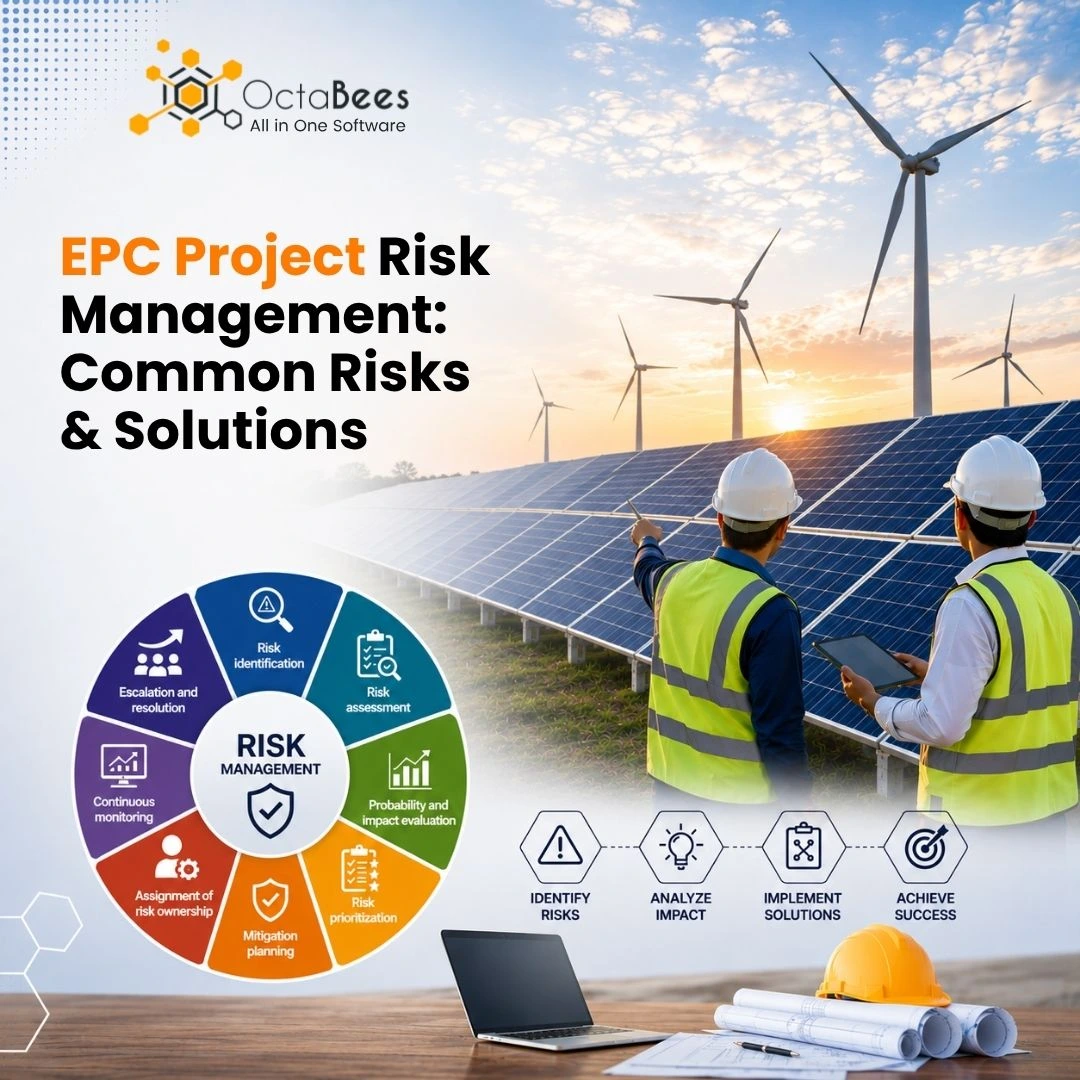
A structured risk management process generally includes:
- Risk identification
- Risk assessment
- Probability and impact evaluation
- Risk prioritization
- Mitigation planning
- Assignment of risk ownership
- Continuous monitoring
- Escalation and resolution
The objective is not to eliminate every possible risk. Instead, it is to understand potential threats early and establish appropriate actions to reduce their likelihood or impact.
Why Is Risk Management Important in EPC Projects?
EPC projects often involve tightly connected activities. When one critical activity is delayed, the impact can extend to several downstream tasks.
For example, in a Wind EPC project, delays in long-lead components can affect erection schedules and heavy-lift planning. In an Engineering EPC project, an unapproved drawing revision can delay procurement or construction activities. Similarly, material shortages or contractor delays can affect the planned completion of a Solar EPC project.
Without a structured process, teams may discover risks only after they become major issues.
Effective risk management helps organizations:
- Improve project planning
- Identify potential schedule delays
- Control cost overruns
- Manage procurement dependencies
- Improve contractor accountability
- Maintain document and approval control
- Strengthen quality and safety processes
- Improve management visibility
- Support faster decision-making
Common Risks in EPC Project Management
The list of risks in project management can vary depending on project type, location, contract scope, and technical complexity. However, several risks commonly affect EPC operations.
1. Scope and Requirement Risks
Unclear project requirements or changes after project initiation can affect engineering, procurement, budgets, and schedules.
Scope changes may lead to additional work, revised material requirements, contractor changes, or new approvals. Without a formal change management process, teams may begin executing changes without understanding their complete cost or schedule impact.
Solution:
Define project scope clearly, maintain documented requirements, and establish a structured change approval process. Changes should be evaluated for their impact before implementation.
2. Engineering and Design Risks
Engineering delays and drawing errors can significantly affect project execution.
This is particularly important in Engineering EPC projects where multiple disciplines, technical documents, equipment specifications, and approvals must remain coordinated. Using an outdated drawing at the site can result in rework and construction delays.
Solution:
Maintain centralized document control with revision history and approval workflows. Teams should have access to the latest approved documents, while engineering changes should remain traceable.
3. Procurement and Supply Chain Risks
Procurement delays can disrupt the entire project schedule, especially when critical equipment has long manufacturing or delivery timelines.
For Wind EPC projects, components and logistics may require detailed planning due to long-lead procurement and remote project locations. Solar projects can also face delays related to modules, inverters, structures, cables, and other equipment.
Solution:
Track procurement through connected workflows such as PR, RFQ, vendor evaluation, PO, delivery tracking, and GRN. Critical and long-lead items should receive additional monitoring and escalation.
4. Material and Inventory Risks
Poor material control can lead to shortages, excess purchases, misallocation, theft, or inaccurate consumption reporting.
Large Solar EPC sites may manage significant quantities of panels, inverters, cables, and other materials across multiple zones. Similarly, Wind EPC projects require traceability for high-value components delivered to remote locations.
Solution:
Use site-level inventory tracking, GRN processes, barcode or serial-number tracking, material issue records, stock audits, and consumption monitoring.
5. Schedule Delay Risks
Delays can result from late engineering, procurement issues, contractor dependencies, weather conditions, approval delays, or unforeseen site constraints.
When schedules are maintained separately from operational updates, project managers may struggle to identify problems early.
Solution:
Connect project schedules with milestones, dependencies, progress updates, and identified constraints. Regularly compare planned progress with actual progress and escalate ageing issues.
6. Contractor and Resource Risks
EPC projects often depend on multiple contractors working across civil, mechanical, electrical, and installation activities.
Poor coordination can create workfront conflicts, delays, measurement disputes, and accountability gaps.
Solution:
Define work orders, responsibilities, quantities, deadlines, and progress measurements clearly. Track contractor activities and link constraints or pending actions to responsible owners.
7. Quality Risks
Quality issues can result in rework, testing failures, delays, and additional costs.
In Engineering EPC projects, inspection records, test certificates, NCRs, and corrective actions may be essential for maintaining compliance and project traceability.
Solution:
Use standardized inspection checklists, QC hold points, NCR tracking, CAPA workflows, test certificate management, and documented approval processes.
8. Health and Safety Risks
Construction and infrastructure activities can involve significant HSE risks. Field incidents, unsafe conditions, missing PPE compliance, and inadequate risk assessments can affect both people and project operations.
Solution:
Implement hazard identification processes, digital HIRA and JSA assessments, incident and near-miss reporting, PPE tracking, toolbox talks, and safety training records.
9. Regulatory and Approval Risks
Projects may require approvals from authorities, clients, utilities, or other regulatory bodies. Missing documents or delayed follow-ups can affect critical project activities.
For example, Solar EPC projects may involve compliance and approval processes connected to project commissioning, while Engineering EPC projects can require technical and customer approvals throughout execution.
Solution:
Maintain centralized approval registers, document checklists, validity tracking, reminders, and escalation workflows.
10. Cost and Budget Risks
Cost overruns may remain unnoticed when project budgets, procurement commitments, actual expenses, and progress data are maintained separately.
A project can appear operationally on schedule while profitability is gradually declining.
Solution:
Track budget versus actual costs, procurement commitments, material consumption, and project expenses regularly. Management dashboards can help identify deviations before they become significant.
List of Risks in Project Management and Their Solutions
| Project Risk | Potential Impact | Practical Solution |
| Scope changes | Cost and schedule overruns | Change control and impact assessment |
| Design revisions | Rework and construction delays | Version control and approvals |
| Procurement delays | Missed project milestones | Delivery tracking and alerts |
| Material losses | Increased project costs | Serial and inventory tracking |
| Contractor delays | Slow project execution | Work orders and progress monitoring |
| Quality issues | Rework and compliance concerns | Digital inspections and NCR workflows |
| Safety incidents | Operational disruptions | HIRA, JSA and incident reporting |
| Approval delays | Blocked project activities | Approval registers and reminders |
| Cost overruns | Reduced profitability | Budget vs actual monitoring |
| Poor reporting | Delayed decision-making | Real-time dashboards and DPR |
What Is a Risk Management Plan?
A risk management plan is a structured document or process that defines how project risks will be identified, assessed, monitored, and addressed.
For a Solar EPC project, the plan can include risks related to engineering, procurement, materials, construction, approvals, quality, safety, and commissioning.
A practical risk management plan should define:
- Risk Identification: Identify potential risks across each project stage and department.
- Risk Assessment: Evaluate the likelihood of the risk occurring and its potential impact on project objectives.
- Risk Priority: Prioritize risks based on their severity so teams can focus on the most significant issues.
- Mitigation Actions: Define actions that can reduce the likelihood or impact of identified risks.
- Risk Ownership: Assign a responsible person or team for monitoring and addressing each risk.
- Monitoring and Escalation: Review risks regularly and escalate unresolved or ageing issues to appropriate management levels.
A risk register can help maintain this information in a structured format throughout the project lifecycle.
Looking to improve risk visibility across your EPC projects? Contact Us to explore how a connected ERP platform can support project control and informed decision-making.
How ERP Systems Support EPC Project Risk Management?
An ERP System Function extends beyond recording transactions. In project-based businesses, connected systems can help teams bring information from multiple departments into one operational environment.
For EPC companies, ERP can connect project schedules, procurement, inventory, engineering documents, quality records, HSE activities, financial information, and field reporting.
Centralized Risk Visibility
Project managers can view information from different departments without relying entirely on separate spreadsheets or manually compiled reports.
Connected Procurement Tracking
Procurement workflows can help teams monitor requisitions, RFQs, purchase orders, deliveries, and material receipts, making supply chain risks easier to identify.
Real-Time Project Reporting
DPRs, milestone updates, and field reporting can provide current information about project progress and emerging constraints.
Document and Revision Control
Engineering documents can be managed with version control and approval workflows, reducing the risk of teams working with outdated information.
Inventory Traceability
Barcode and serial tracking can improve visibility of high-value materials and equipment across warehouses and project sites.
Quality and HSE Management
Digital checklists, NCR workflows, CAPA records, incident reporting, HIRA, JSA, and compliance records can support structured risk control.
Portfolio-Level Dashboards
Management teams can monitor budget performance, schedule health, constraints, and project risks across multiple projects from centralized dashboards.
Risk Management Across Different EPC Industries
Risk priorities can differ depending on the type of EPC project being executed.
Solar EPC Projects
Solar projects may require risk management across multi-site execution, material allocation, engineering coordination, installation progress, compliance, commissioning, and long-term O&M.
Relevant controls can include zone-based tracking, serial-level material visibility, schedule and DPR monitoring, project controls, quality processes, and portfolio dashboards.
Wind EPC Projects
Wind projects involve additional complexity related to long-lead procurement, heavy-lift logistics, remote sites, multiple contractors, turbine-wise execution, and grid connection.
Relevant controls can include delivery tracking, site GRN, barcode scanning, contractor work orders, HSE reporting, MDL management, and schedule monitoring.
Engineering EPC Projects
Engineering projects are often document-heavy and approval-driven. Risks can emerge from superseded drawings, delayed technical approvals, vendor documentation, quality issues, and uncontrolled changes.
Relevant controls include MDL management, drawing version control, vendor technical evaluation, NCR and CAPA tracking, change management, and audit trails.
Best Practices for Effective EPC Risk Management
A successful risk management process requires continuous attention rather than a one-time exercise.
Identify Risks Early
Risk assessment should begin during planning and continue throughout the project lifecycle.
Maintain a Centralized Risk Register
Avoid keeping risk information scattered across emails and spreadsheets. Maintain clear records of risks, owners, priorities, actions, and current status.
Assign Clear Ownership
Every significant risk should have an assigned owner responsible for monitoring and follow-up.
Link Risks to Project Activities
Where possible, connect risks with affected schedules, packages, procurement activities, contractors, or milestones.
Review Risks Regularly
Project conditions change continuously. Regular reviews help teams identify new risks and reassess existing ones.
Use Data for Escalation
Ageing risks, delayed actions, schedule deviations, and budget concerns should be supported by current project data when escalated to management.
Connect Risk Management with Other Processes
Risk management becomes more effective when connected with procurement, project controls, quality, HSE, engineering, and finance instead of functioning as an isolated process.
Frequently Asked Questions
It is the process of identifying, assessing, and controlling risks that may affect project cost, schedule, quality, safety, or performance.
Common risks include scope changes, design revisions, procurement delays, material shortages, cost overruns, quality issues, and schedule delays.
It includes identified risks, impact assessments, priorities, mitigation strategies, responsible owners, and monitoring processes.
ERP centralizes project data, helping teams identify delays, cost deviations, material issues, and other risks earlier.
Proper document control ensures teams use the latest approved drawings and specifications, reducing rework, errors, and delays.
Conclusion
EPC projects face risks across every stage, from early planning and engineering to procurement, construction, commissioning, and O&M. Scope changes, delayed materials, design revisions, contractor dependencies, quality concerns, safety incidents, and cost overruns can all affect project outcomes when they are not identified and managed systematically. Effective risk management requires clear ownership, structured assessment, continuous monitoring, and timely mitigation actions. For companies managing Solar EPC, Wind EPC, and Engineering EPC operations, connected digital systems can improve visibility by bringing project schedules, procurement, inventory, documents, quality, HSE, and financial information together. A proactive approach allows teams to identify warning signs earlier, coordinate responses more effectively, and maintain stronger control over complex project environments.
Related Posts