
Cost management is one of the most important aspects of renewable energy EPC execution. Large…
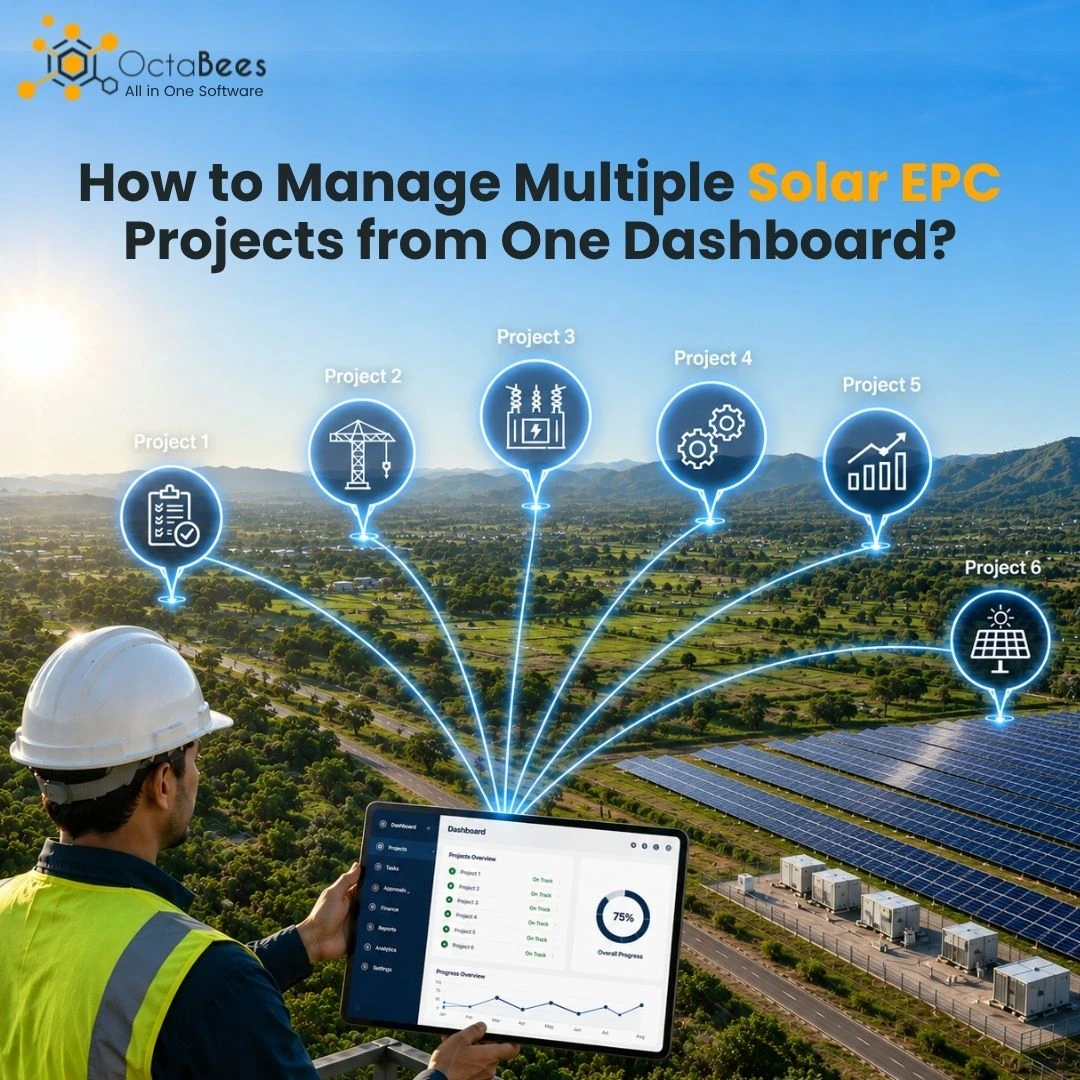
Managing one solar project requires coordination between sales, engineering, procurement, inventory, finance, field teams, and customers. Managing several projects simultaneously multiplies that complexity. Project managers need to know which sites are progressing as planned, where materials are delayed, which teams require support, and whether individual projects are staying within budget. Without centralized information, teams may depend on spreadsheets, calls, emails, and separate applications that make it difficult to maintain an accurate view of operations. For a growing Solar EPC business, a unified ERP dashboard can bring these activities together and provide a real-time view of the entire project portfolio. From project milestones and procurement status to inventory, costs, field updates, approvals, and resource allocation, a connected dashboard enables managers to identify issues earlier and coordinate multiple projects with greater control.
Why Managing Multiple Solar Projects Becomes Difficult?
As a solar company expands, the number of simultaneous activities increases rapidly. One project may be awaiting a net metering approval while another is undergoing installation, and a third may be waiting for material procurement. Each project has different schedules, customers, contractors, locations, and resource requirements.
For a Solar EPC organization, managing these moving parts manually can create information gaps and make it difficult to prioritize urgent issues. A centralized ERP dashboard provides a consolidated view while still allowing managers to drill down into individual projects, sites, activities, and transactions.
Create a Centralized Project Portfolio View
The first step in managing multiple projects efficiently is creating one reliable source of project information. Instead of opening separate spreadsheets or systems, managers should be able to see all active projects from a single dashboard.
A Solar EPC team can use an ERP dashboard to monitor project stages, milestones, completion percentages, pending activities, project owners, and overall status. Portfolio-level visibility makes it easier to compare projects, identify delayed activities, and allocate management attention where it is most needed.
Track Project Progress in Real Time
Knowing the current status of every site is essential when managing multiple installations. Delayed reporting can leave project managers unaware of problems until they become significant.
An ERP dashboard enables Solar EPC teams to combine Daily Progress Reports, task updates, milestone status, geo-tagged photographs, and planned-versus-actual progress in one view. Managers can quickly identify projects that are ahead, on schedule, or falling behind and take corrective action based on current field information.
Monitor Procurement Across All Projects
Procurement becomes increasingly complex when materials must be purchased for multiple projects simultaneously. Teams need to know which purchase requisitions have been approved, which RFQs are under evaluation, and which purchase orders are awaiting delivery.
For Solar EPC businesses, an integrated dashboard connects procurement activity with project requirements. Managers can track purchase requisitions, RFQs, comparative statements, purchase orders, vendor responses, and delivery status while identifying long-pending procurement activities before they affect installation schedules.
Maintain Inventory Visibility Across Sites
Solar projects require panels, inverters, mounting structures, cables, electrical equipment, and other materials to be available at the right location and time. Poor coordination between central warehouses and project sites can result in shortages, excess stock, or unnecessary purchases.
An ERP gives Solar EPC companies centralized visibility into warehouse and site inventory. Barcode scanning, serial number tracking, Goods Receipt Notes, material issues, consumption records, stock ledgers, and reorder levels help managers understand what is available, where it is located, and how materials are being consumed.
Control Project Budgets and Costs
Managing multiple projects requires continuous financial monitoring. A project that appears operationally healthy may still be losing margin because of increased material costs, additional contractor expenses, or unexpected site requirements.
With an ERP dashboard, Solar EPC managers can compare project budgets with committed and actual costs. BOQ/BOM-based costing, rate masters, approval workflows, scenario costing, and profitability reports provide the financial information needed to identify cost deviations early and protect project margins.
Coordinate Field Teams and Contractors
Multiple project sites often require engineers, technicians, supervisors, contractors, and other field resources to work simultaneously. Without centralized coordination, teams may be overallocated at one site while another project experiences a resource shortage.
A connected ERP helps Solar EPC organizations assign tasks, allocate resources, manage contractor work orders, monitor workloads, and track field progress from one system. Mobile applications allow field teams to update tasks, submit reports, upload photographs, and communicate site requirements without depending entirely on office-based reporting.
Managing multiple solar projects? Contact Us to simplify project tracking and gain complete visibility with a unified ERP dashboard.
Manage Approvals and Compliance from One Place
Solar projects can depend on several approvals and documents before installation or commissioning can proceed. Missing a document or delaying a follow-up can hold up an otherwise completed project.
For Solar EPC companies, ERP-based approval management provides a centralized register for applications, documents, fees, follow-ups, statuses, and validity periods. Project managers can identify pending approvals and understand which activities may be blocked, helping teams prioritize follow-ups before delays affect the project schedule.
Use Dashboards to Identify Project Risks Early
A dashboard becomes valuable when it does more than display information. It should help managers identify exceptions that require attention.
An ERP allows Solar EPC management teams to monitor overdue tasks, delayed procurement, inventory shortages, budget variances, unresolved quality issues, pending approvals, safety incidents, and schedule deviations. By bringing these indicators together, managers can focus on exceptions instead of manually reviewing every project record.
Compare Multiple Projects Using Common KPIs
A standardized set of KPIs makes portfolio management more effective. Managers can compare projects using consistent measures rather than relying on subjective updates from individual teams.
For Solar EPC operations, useful KPIs may include project completion percentage, planned versus actual progress, budget versus actual cost, procurement status, material consumption, pending tasks, approval status, and project profitability. Role-based dashboards can present the most relevant indicators to project managers, procurement teams, finance teams, and senior management.
How One Dashboard Improves Multi-Project Management?
| Management Area | Dashboard Visibility | Operational Benefit |
| Project Progress | Milestones, DPRs, completion percentage | Faster identification of delays |
| Procurement | PRs, RFQs, POs, deliveries | Better material planning |
| Inventory | Site stock, consumption, serial numbers | Reduced shortages and excess stock |
| Resources | Team workload and task allocation | Better workforce utilization |
| Costs | Budget, committed, and actual costs | Improved margin control |
| Approvals | Applied, pending, and received status | Faster follow-ups |
| Quality | Inspections, NCRs, CAPA | Better quality control |
| HSE | Incidents, hazards, PPE compliance | Stronger safety oversight |
| Analytics | KPIs and profitability | Better management decisions |
Choose an ERP Dashboard That Can Scale with Your Projects
A dashboard should support growth rather than become another disconnected reporting tool. When evaluating an ERP, Solar EPC businesses should look for project portfolio management, mobile field reporting, procurement integration, inventory control, costing, approval workflows, role-based dashboards, and drill-down analytics. The system should also connect project information with related transactions so managers can move from a high-level KPI to the underlying task, purchase order, material movement, or field report. This creates a more useful management environment than static reports and helps teams respond to operational changes quickly.
Build a Single Source of Truth for Solar Operations
The real value of a centralized dashboard comes from connecting information rather than simply displaying it. When sales, engineering, procurement, inventory, project execution, finance, quality, compliance, and O&M work from the same database, teams spend less time reconciling information and more time acting on it.
For a Solar EPC company managing multiple projects, this connected approach can improve coordination across departments, strengthen accountability, and provide management with a clearer picture of overall business performance. As project volumes increase, having one reliable source of information becomes increasingly important for maintaining operational control.
Frequently Asked Questions
An ERP dashboard consolidates project progress, procurement, inventory, costs, resources, approvals, and field updates into one view. Managers can monitor multiple projects simultaneously and drill down into individual sites or activities when action is required.
Yes. A centralized ERP can provide portfolio-level visibility across multiple sites while allowing users to view individual project schedules, tasks, inventory, progress reports, costs, and other operational information.
ERP software provides visibility into team workloads, tasks, contractors, and project requirements. Managers can allocate resources based on current project needs and identify potential shortages or workload conflicts.
Yes. Inventory modules can track materials across warehouses and project sites using features such as barcode scanning, serial number tracking, GRNs, material issues, consumption records, and stock ledgers.
Important KPIs include planned versus actual progress, project completion percentage, budget versus actual cost, procurement status, material consumption, pending tasks, approval status, resource utilization, and project profitability.
Conclusion
Managing several solar installations at the same time requires more than individual project tracking. Managers need a clear view of schedules, resources, procurement, inventory, costs, approvals, field progress, and risks across the entire portfolio. A centralized ERP dashboard brings these functions together and creates a common source of information for teams working across different locations. For Solar EPC businesses, this connected approach can improve coordination, reduce information gaps, identify delays earlier, and support better resource and financial decisions. As project volumes grow, the ability to monitor operations from one dashboard becomes increasingly valuable. With the right ERP platform, organizations can move from reactive project management to a more structured, data-driven approach that supports efficient execution and sustainable growth.
Related Posts