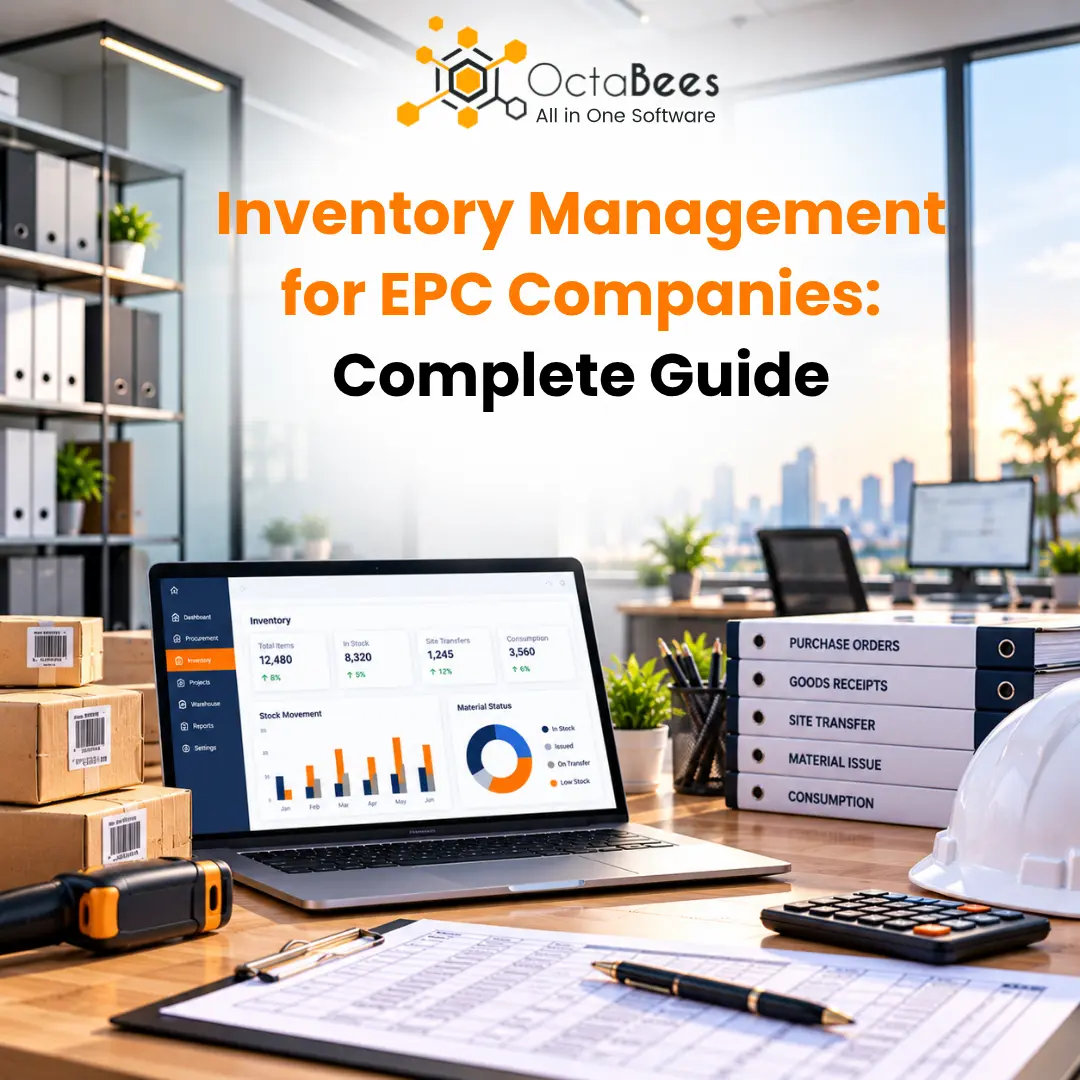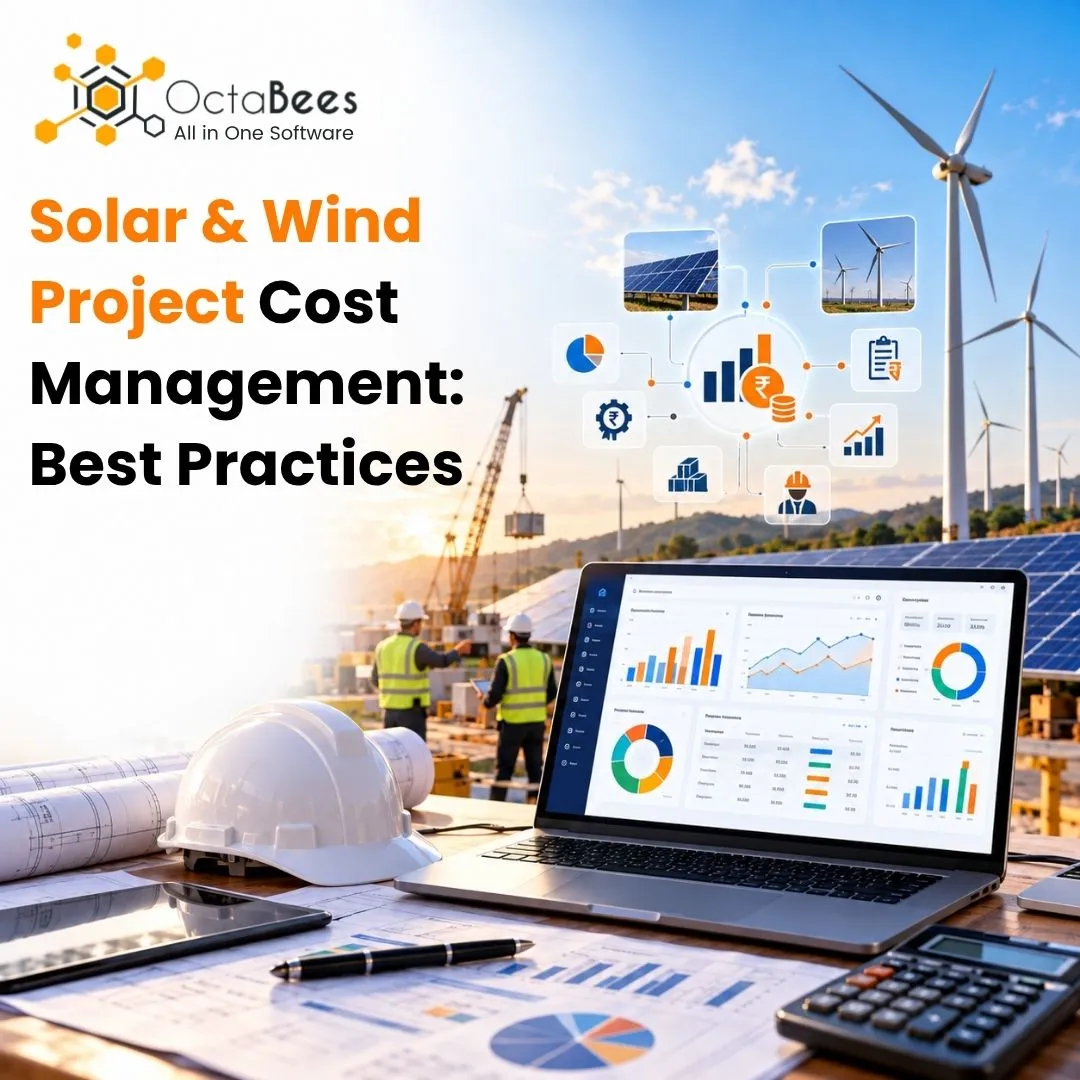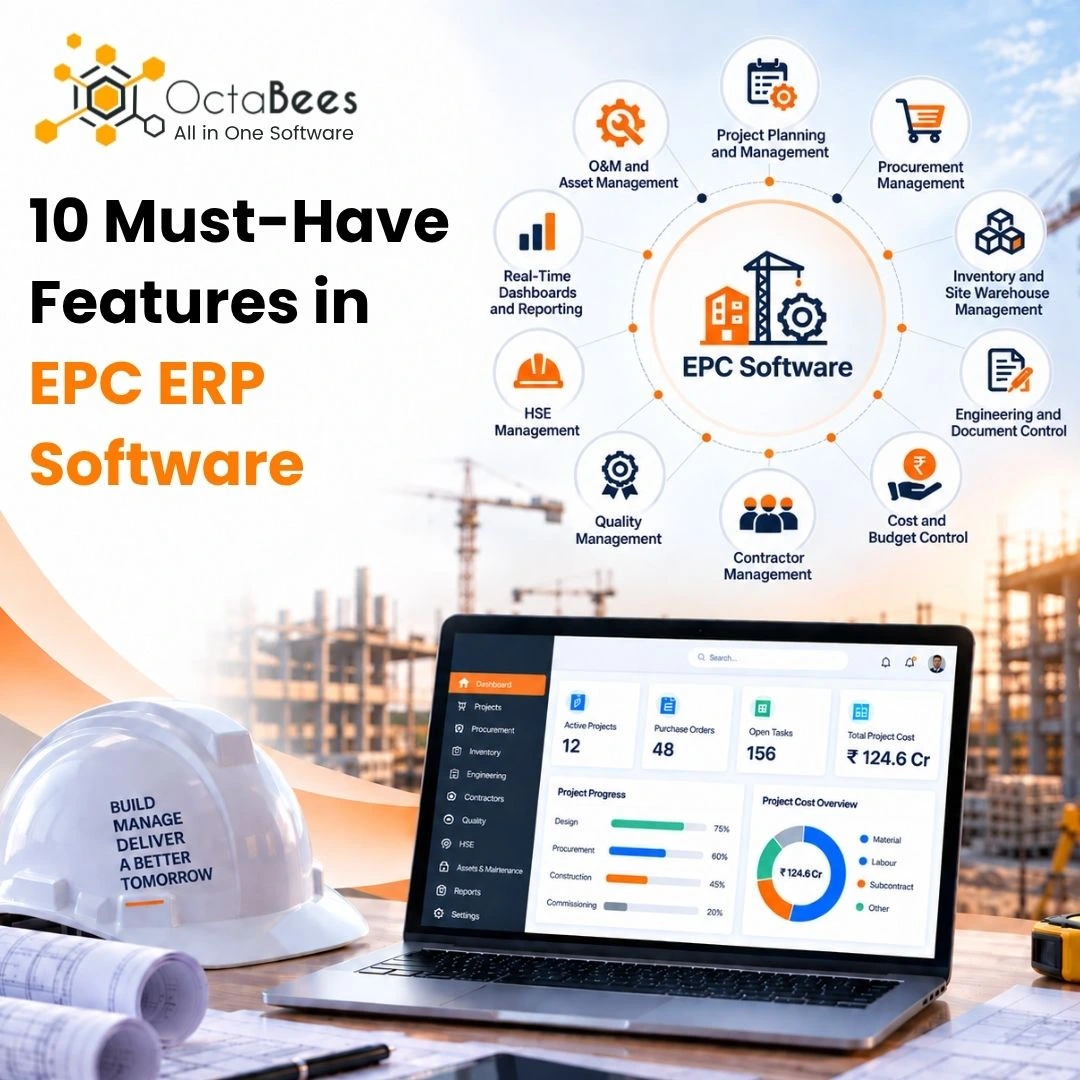

EPC companies handle large volumes of materials, equipment, components, and consumables across engineering, procurement, construction,…
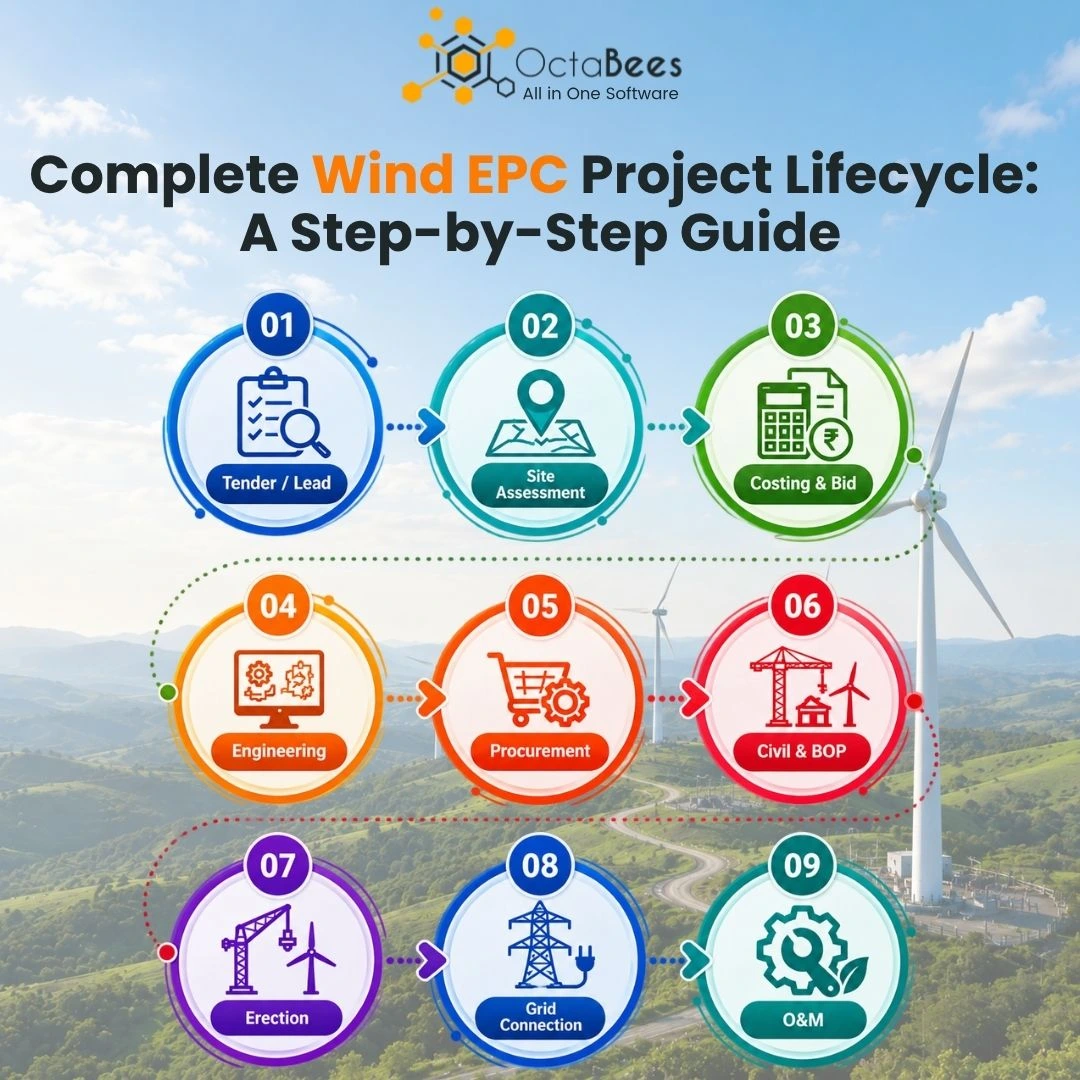
Wind energy projects involve numerous activities that must be completed in the right sequence to achieve successful commissioning and long-term performance. From identifying project opportunities and assessing sites to procuring turbines, managing contractors, completing civil and electrical works, and connecting the project to the grid, every stage depends on accurate planning and coordination. For Wind EPC companies, the challenge becomes greater when projects involve remote locations, long-lead equipment, multiple contractors, complex documentation, and strict regulatory requirements. A structured project lifecycle helps teams understand dependencies, assign responsibilities, control costs, and monitor progress from beginning to end. Modern ERP platforms can further connect these activities through centralized project management, procurement, inventory, engineering documentation, field reporting, quality, HSE, and O&M workflows. Understanding each stage provides a clearer foundation for managing wind projects efficiently and maintaining control throughout their operational life.
What Is the Wind EPC Project Lifecycle?
The Wind EPC project lifecycle represents the sequence of activities required to develop, construct, commission, and maintain a wind energy project. It typically begins with a tender or project enquiry and progresses through assessment, costing, engineering, procurement, civil and electrical construction, turbine erection, grid connection, and O&M.
For Wind EPC organizations, understanding these stages is essential because activities are interconnected. A delay in engineering documentation can affect procurement, while late equipment delivery can affect erection schedules and grid connection.
A centralized ERP platform helps teams connect these stages and maintain visibility from the initial project opportunity through long-term asset management.
Step 1: Tender / Lead
The lifecycle begins with identifying a tender, receiving a project enquiry, or evaluating a potential business opportunity. Commercial teams need to capture client information, tender requirements, eligibility criteria, submission deadlines, technical specifications, and required documents for Wind EPC projects.
An ERP can centralize tender and lead information while providing bid calendars, deadline alerts, eligibility screening, document checklists, and follow-up management. Once an opportunity progresses, relevant information can move into the costing and bidding workflow instead of being entered again.
Key activities include:
- Tender notice and enquiry capture
- Eligibility and requirement screening
- Bid deadline tracking
- Pre-bid query management
- Addendum and document tracking
- Lead and opportunity management
- Tender win-loss analysis
Step 2: Site Assessment
After an opportunity is qualified, the project moves into site assessment and feasibility evaluation. For Wind EPC projects, field teams may collect information about the proposed location, accessibility, terrain, existing infrastructure, grid connectivity, and other technical requirements.
Mobile ERP applications allow teams to capture site survey information, photographs, observations, coordinates, and supporting documents directly from the field. These records can then be accessed by commercial, engineering, and project teams for further planning.
Key activities include:
- Site survey and assessment
- Geo-tagged photographs
- Field observations and remarks
- Site accessibility records
- Technical requirement capture
- Survey document management
- Site-related task assignment
Step 3: Costing & Bid
The information gathered during the site assessment becomes the foundation for project estimation and bid preparation. For Wind EPC projects, teams need to calculate equipment, materials, labour, logistics, civil works, electrical works, contractor costs, contingencies, and other expenses.
An ERP can support BOQ/BOM-based costing, reusable rate templates, live material and service rates, markups, margins, contingency controls, and what-if scenarios. Approval workflows can ensure estimates are reviewed before the final quotation is submitted.
Key activities include:
- BOQ and BOM preparation
- Material and labour rate management
- Cost estimation
- Margin and markup calculation
- Scenario and what-if costing
- Contingency management
- Budget approval
- Quotation preparation
Step 4: Engineering
Once the project is awarded, engineering teams convert requirements into detailed, construction-ready designs and documentation. Wind projects may involve system designs, site layouts, technical specifications, equipment datasheets, drawings, and vendor documentation.
An ERP provides centralized engineering document control through Master Document Lists (MDL), revision history, approval workflows, and controlled access. For Wind EPC projects, this helps ensure that construction and procurement teams are working from the correct approved information.
Key activities include:
- Master Document List management
- System design and site layouts
- Drawing preparation and revision control
- Component datasheets
- Technical documentation
- Engineering approvals
- BOM generation
- Design change management
- Impact analysis for engineering changes
Managing the complete wind project lifecycle? Contact Us to simplify execution with a unified ERP platform built for EPC operations.
Step 5: Procurement
Once engineering requirements and material specifications are finalized, procurement begins. Wind EPC projects often involve expensive and long-lead equipment, making timely purchasing and supplier coordination essential.
ERP procurement workflows connect project requirements with purchase requisitions, RFQs, vendor responses, comparative statements, technical evaluations, purchase orders, and delivery tracking. This gives project and procurement teams visibility into the status of critical materials.
Key activities include:
- Purchase requisitions
- RFQ creation and vendor responses
- Technical vendor evaluation
- Comparative statements
- Purchase order generation
- Multi-level approvals
- Vendor performance tracking
- Delivery schedule monitoring
- Long-lead item tracking
Step 6: Civil & BOP
infrastructure required for turbine installation and operation. In Wind EPC projects, this may include foundations, internal roads, drainage, cabling, substations, electrical infrastructure, and other site works.
ERP project management tools help teams divide work into packages, assign contractors, track material consumption, monitor progress, and manage quality hold points. Progress updates from the field can be connected directly to the overall project schedule.
Key activities include:
- Foundation construction
- Internal roads and site development
- Electrical and cabling works
- Substation activities
- Contractor work orders
- Material issue and consumption
- Quality inspections
- Progress tracking
- Daily Progress Reports
- Budget and schedule monitoring
Step 7: Erection
Turbine erection is one of the most critical stages of a Wind EPC project. It requires coordination between heavy-lift contractors, crane operators, logistics teams, site engineers, and safety personnel. Equipment availability and weather conditions can also affect erection schedules.
An ERP enables teams to track erection activities, contractor work orders, crane deployment, material availability, installation progress, safety requirements, and site constraints. Field teams can update progress and upload geo-tagged photographs through mobile applications, giving management a current view of erection activities.
Key activities include:
- Turbine component receipt and verification
- Crane and heavy-lift coordination
- Tower section installation
- Nacelle installation
- Blade installation
- Electrical connection activities
- Contractor progress tracking
- Equipment deployment
- Site safety monitoring
- Installation milestone tracking
Step 8: Grid Connection
Once construction and erection activities are substantially complete, the Wind EPC project moves toward testing, commissioning, and grid connection. This stage requires coordination between project teams, electrical engineers, utility authorities, and other stakeholders.
An ERP can help track testing activities, statutory approvals, documents, commissioning checklists, pending issues, and grid-related milestones. Connecting these activities to the project schedule gives management visibility into commissioning readiness and potential blockers.
Key activities:
- Electrical testing
- Commissioning checklists
- Utility coordination
- Statutory approvals
- Grid connection documentation
- Test certificates
- Punch-list tracking
- Approval monitoring
- Commissioning records
- Handover preparation
Step 9: O&M
The project lifecycle does not end when the wind farm is commissioned. Long-term Operations & Maintenance is essential for maintaining asset availability, performance, and revenue generation in Wind EPC projects.
An ERP can convert commissioned assets into an O&M workflow by maintaining asset records, warranties, service history, preventive maintenance schedules, breakdown reports, spare parts, complaints, and service work orders. Performance and availability analytics provide management with ongoing visibility into asset health.
Key activities:
- Preventive maintenance
- Breakdown management
- Service work orders
- Asset registry
- Warranty tracking
- Spare parts management
- Complaint management
- Service history
- Availability reporting
- Downtime analysis
- Performance monitoring
Wind EPC Project Lifecycle at a Glance
| Stage | Key Activities | ERP Support |
| Tender & Enquiry | Tender tracking, eligibility, bid preparation | Tender management |
| Site Assessment | Surveys, feasibility, site records | Mobile field reporting |
| Costing | BOQ/BOM, rates, margins, scenarios | Costing & budgeting |
| Planning | Milestones, dependencies, resources | Project management |
| Engineering | Drawings, MDL, revisions, approvals | Engineering & document control |
| Procurement | RFQs, vendors, POs, deliveries | Procurement management |
| Logistics | Material receipt and movement | Inventory & warehouse |
| Civil & BOP | Foundations, roads, cabling | Project & contractor management |
| Erection | Turbine installation and progress | Project & field management |
| QA/QC & HSE | Inspections, NCRs, incidents | Quality & HSE |
| Commissioning | Testing, approvals, grid connection | Project & statutory management |
| Handover | Documents, warranties, records | Document control |
| O&M | Maintenance, breakdowns, performance | O&M management |
How the 9-Step Workflow Works as One Connected Process?
The biggest advantage of an integrated ERP is that these stages do not operate as isolated activities. Information captured during the tender stage can support costing, approved costing can become the project budget, engineering requirements can drive procurement, procurement data can connect with inventory, and project execution data can flow into commissioning and O&M.
For Wind EPC organizations, this connected workflow eliminates repeated data entry and reduces information gaps between departments. Management can monitor the complete project lifecycle through dashboards while individual teams access the detailed information relevant to their responsibilities.
Tender / Lead → Site Assessment → Costing & Bid → Engineering → Procurement → Civil & BOP → Erection → Grid Connection → O&M
This connected approach creates a single digital thread across the project, helping teams maintain better control over schedules, costs, materials, documentation, contractors, quality, safety, and asset performance.
Best Practices for Managing Wind EPC Projects
Effective project lifecycle management requires more than technology. Organizations should establish clear ownership, standardized workflows, documented approvals, accurate project schedules, and regular performance reviews.
For Wind EPC companies, combining standardized processes with an integrated ERP can improve coordination across departments and project sites. Teams should also maintain accurate master data, regularly update field information, monitor critical dependencies, and use project dashboards to identify deviations early. These practices create stronger control over schedule, cost, quality, safety, and long-term asset performance.
Frequently Asked Questions
The main stages generally include tendering, site assessment, costing, project planning, engineering, procurement, logistics, civil and BOP construction, turbine erection, quality and HSE management, commissioning, handover, and O&M.
Procurement is critical because wind projects depend on specialized and often long-lead equipment. Delays in turbines, electrical equipment, or other materials can affect construction and commissioning schedules.
ERP software can manage Master Document Lists, drawings, revisions, technical documents, approval workflows, vendor evaluations, BOMs, and engineering changes, helping teams maintain document accuracy and traceability.
Yes. ERP platforms can provide centralized dashboards for multiple projects and sites while allowing managers to monitor individual schedules, resources, procurement, inventory, costs, and field progress.
ERP can support O&M through asset registries, preventive maintenance schedules, breakdown management, service history, spare parts tracking, availability reporting, and performance analytics.
Conclusion
Managing several solar installations at the same time requires more than individual project tracking. Managers need a clear view of schedules, resources, procurement, inventory, costs, approvals, field progress, and risks across the entire portfolio. A centralized ERP dashboard brings these functions together and creates a common source of information for teams working across different locations. For Solar EPC businesses, this connected approach can improve coordination, reduce information gaps, identify delays earlier, and support better resource and financial decisions. As project volumes grow, the ability to monitor operations from one dashboard becomes increasingly valuable. With the right ERP platform, organizations can move from reactive project management to a more structured, data-driven approach that supports efficient execution and sustainable growth.
Related Posts