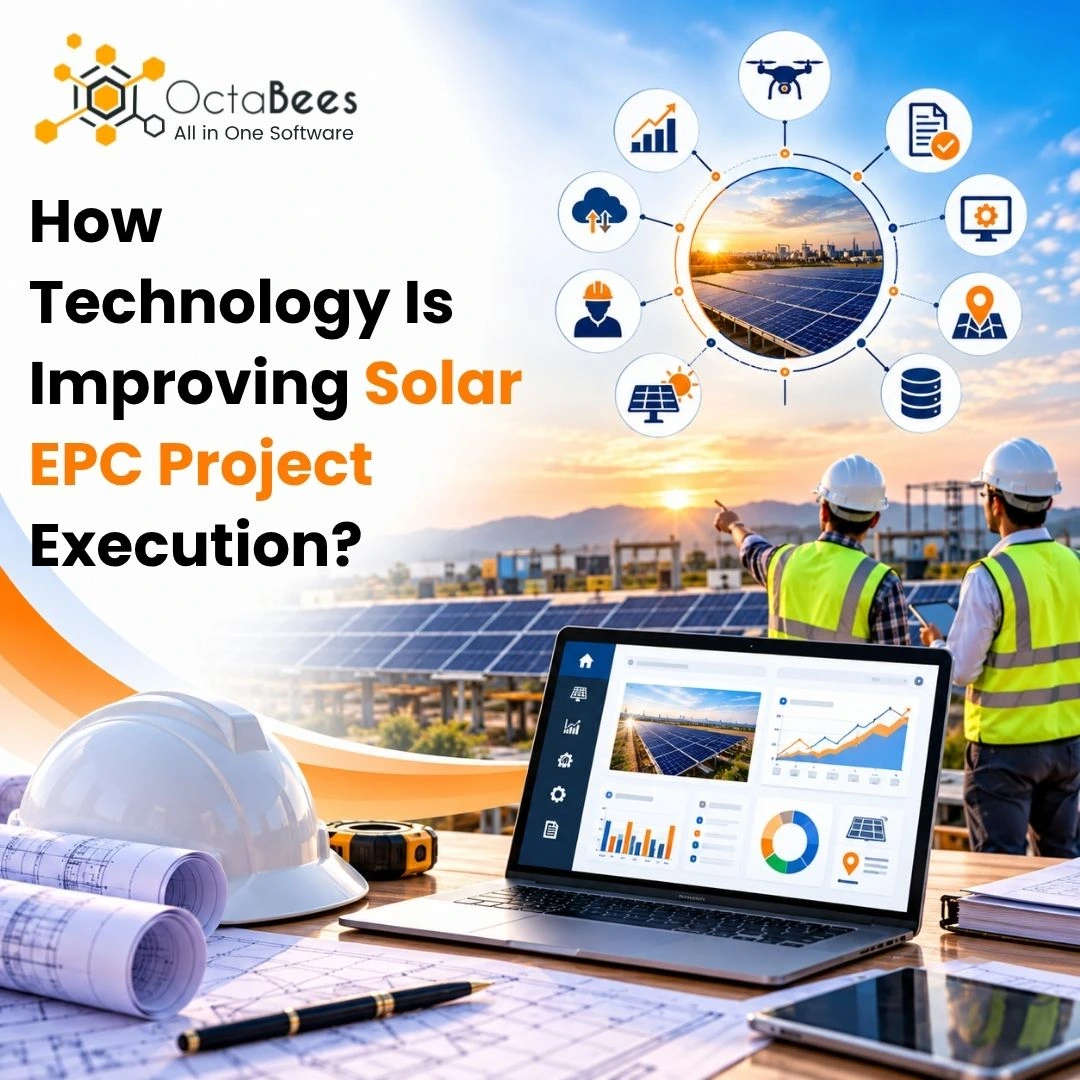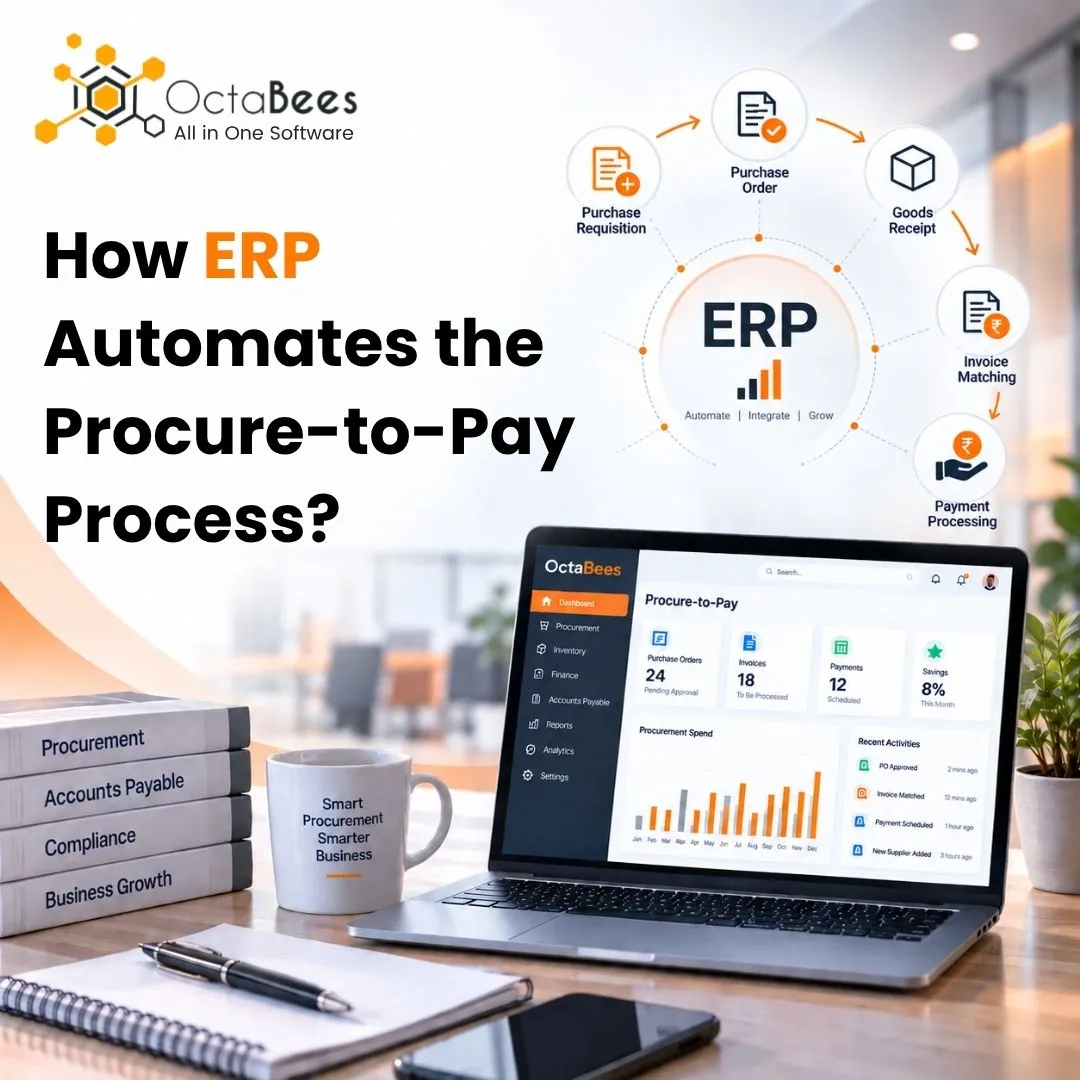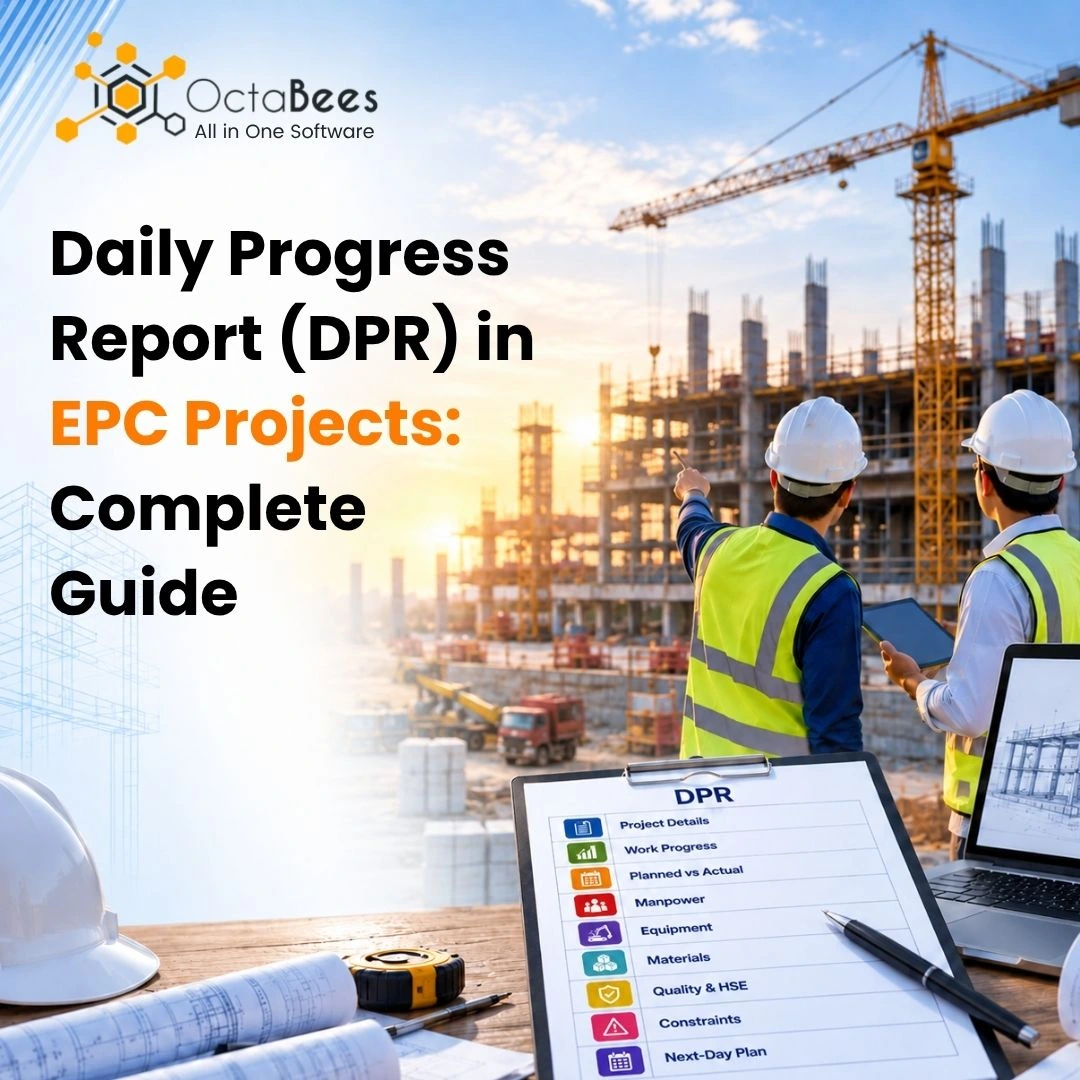

Solar projects involve engineering, procurement, construction, installation, commissioning, and maintenance. Coordinating these activities across multiple…
Managing a solar project involves much more than installing modules and connecting equipment. Teams must coordinate sales, site surveys, engineering, procurement, inventory, contractors, construction, quality, safety, commissioning, billing, and maintenance. As project sizes increase and companies handle multiple sites simultaneously, disconnected spreadsheets and manual reporting can make it difficult to maintain control over schedules, costs, materials, and documentation. Solar EPC project management brings these activities into a structured workflow so teams can plan work, monitor execution, and respond to issues before they affect delivery. Modern ERP platforms can further connect departments through shared project data, mobile field reporting, approval workflows, inventory tracking, and real-time dashboards. For companies planning growth in 2026, understanding how these processes work together can help reduce operational gaps and improve project visibility. A well-organized approach also supports better collaboration between office teams, site teams, contractors, vendors, and management throughout the project lifecycle.
What Is Solar EPC Project Management?
Solar EPC project management refers to planning, coordinating, executing, and monitoring a solar project across its Engineering, Procurement, and Construction activities.
The process typically begins with project requirements and site assessment before moving into estimation, engineering design, purchasing, construction, commissioning, and handover. O&M activities may then continue after the plant becomes operational.
Effective management requires coordination across several functions, including:
- Project planning and scheduling
- Engineering and document control
- Procurement and vendor management
- Inventory and material allocation
- Contractor coordination
- Daily progress reporting
- Quality assurance and quality control
- Health, safety, and environment management
- Cost and budget monitoring
- Commissioning and handover
- Operations and maintenance
The objective is to ensure that people, materials, documents, budgets, and activities remain aligned throughout the project.
Why Is Solar EPC Project Management Important?
In a growing Solar EPC business, projects may involve multiple locations, contractors, suppliers, engineering packages, and approval requirements. A delay in one activity can quickly affect several downstream activities.
For example, delayed engineering drawings can postpone procurement. Delayed material deliveries can affect installation. Poor material tracking can increase wastage or create shortages at the site. Similarly, incomplete progress reporting can prevent management from identifying schedule or cost problems early.
Structured project management helps companies:
- Maintain realistic project schedules
- Assign responsibilities clearly
- Track planned versus actual progress
- Control project budgets
- Monitor procurement status
- Reconcile site inventory
- Coordinate contractors
- Maintain engineering revisions
- Record quality and HSE activities
- Track risks and constraints
- Improve management reporting
The result is better coordination between office and field teams and greater visibility into project performance.
Key Challenges in Managing Solar EPC Projects
Every Solar EPC project can face different challenges depending on its size, location, technology, contract structure, and execution model. However, several operational issues occur frequently across the industry.
Managing Multiple Project Sites
When teams execute several projects simultaneously, information can become fragmented. Project managers may need to collect updates from different site engineers, contractors, and regional teams before preparing management reports.
Controlling Material Movement
Solar projects involve large quantities of panels, inverters, cables, structures, and electrical equipment. Without proper tracking, material shortages, excess consumption, misallocation, or losses can become difficult to identify.
Maintaining Project Cost Visibility
A project may appear to be progressing well while actual costs are exceeding the approved budget. Comparing budgeted, committed, and actual costs regularly helps identify margin pressure earlier.
Coordinating Contractors
Civil, electrical, installation, testing, and other activities may involve multiple contractors. Without clearly assigned work orders, deadlines, progress measurements, and responsibilities, coordination becomes difficult.
Managing Engineering Documents
Drawings and technical documents can go through multiple revisions. Using outdated information at the site can lead to rework, delays, and additional costs.
Reporting Field Progress
Manual reports often take time to compile and may not provide management with sufficiently current information. Mobile-based reporting can improve the speed and consistency of field updates.
How ERP Improves Solar EPC Project Management?
An ERP system can connect different departments and project activities through one centralized database. For Solar EPC businesses, this means information captured during one stage can support the next stage without repeated manual entry.
For example, an approved quotation can become the basis for project creation and budgeting. Engineering requirements can support procurement planning, while purchase orders can connect with goods receipts and site inventory. Field progress can then feed project dashboards and management reports.
Important ERP capabilities include:
Centralized Project Management
Project managers can monitor schedules, milestones, activities, budgets, risks, documents, contractors, and progress from one platform.
Mobile Field Operations
Field teams can submit DPRs, update tasks, capture photographs, report issues, and record material usage directly from project sites.
Procurement Integration
Purchase requisitions, RFQs, vendor comparisons, purchase orders, approvals, and deliveries can be connected to project requirements.
Inventory Visibility
Site warehouses can track receipts, material issues, consumption, serial numbers, and stock balances across multiple locations.
Cost Monitoring
Teams can compare budget, committed costs, actual expenses, and project profitability to identify deviations.
Document Control
Drawings, technical documents, approvals, revisions, and project records can be maintained in a centralized repository.
Real-Time Reporting
Dashboards can provide management with current information about project progress, procurement, inventory, costs, and risks.
Solar EPC Project Lifecycle: Step-by-Step
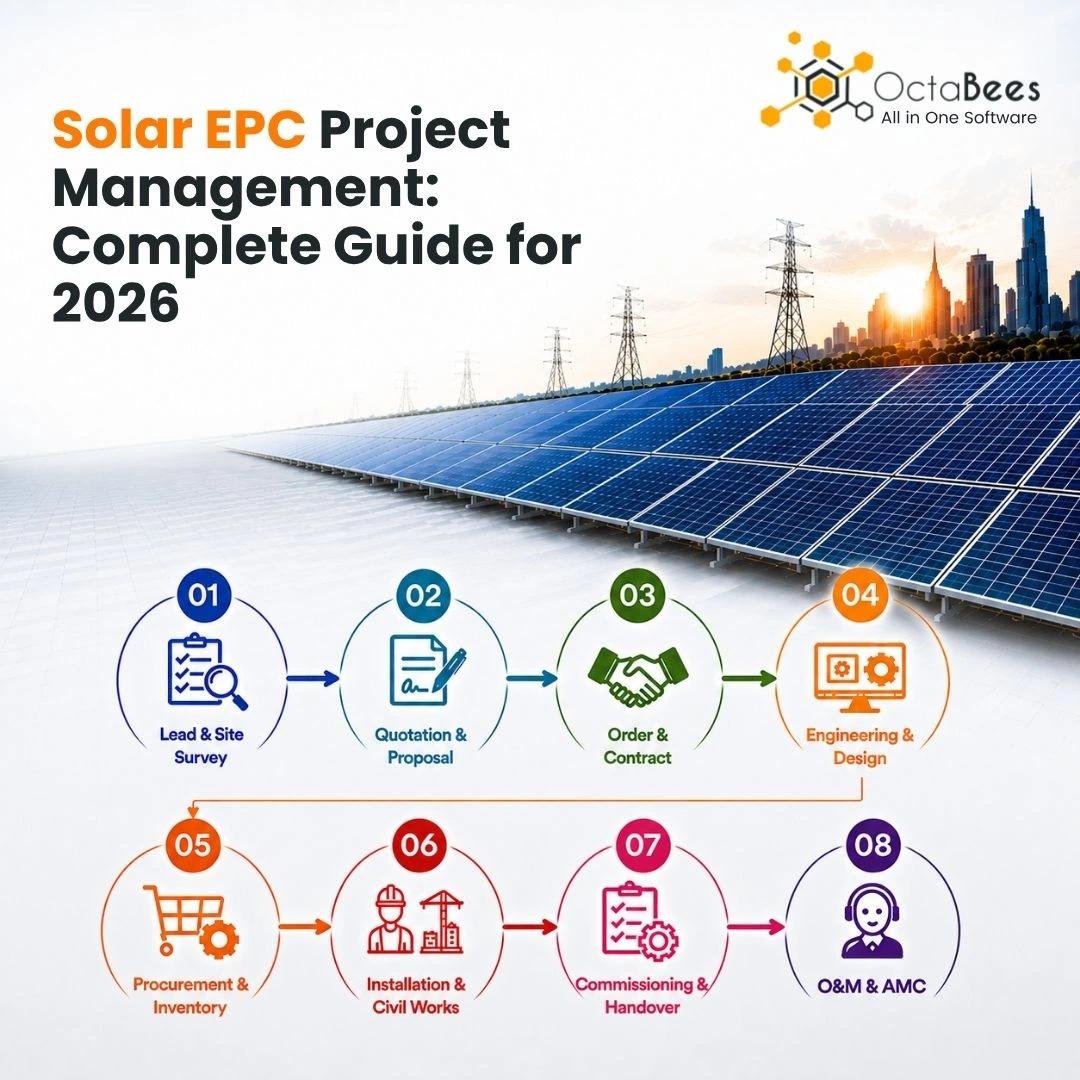
The complete Solar EPC lifecycle can be organized into connected stages. While individual projects may follow different workflows, the following structure covers the major activities from opportunity identification to ongoing service.
| Project Stage | Key Activities | Management Focus |
| Lead & Site Survey | Enquiry, survey, site data, photographs | Feasibility and requirements |
| Quotation & Proposal | BOQ, costing, ROI, quotation | Pricing and margins |
| Order & Contract | Order, contract, milestones | Commercial control |
| Engineering & Design | Layouts, drawings, SLDs, approvals | Design accuracy |
| Procurement & Inventory | PR, RFQ, PO, GRN, allocation | Material availability |
| Installation & Civil Works | Civil, electrical, mounting, cabling | Schedule and execution |
| Commissioning & Handover | Testing, approvals, sign-offs | Completion and compliance |
| O&M & AMC | Maintenance, complaints, assets | Performance and uptime |
Lead and Site Survey
The process starts with capturing an enquiry and understanding the customer’s requirements. A site survey can then record measurements, electrical information, photographs, site conditions, and other technical data required for planning.
Quotation and Proposal
The collected information supports BOQ preparation, system configuration, costing, pricing, and proposal creation. Approval workflows can help ensure that commercial teams follow defined pricing and margin controls.
Order and Contract
Once the customer accepts the proposal, the order can be converted into a project. Contract terms, payment milestones, customer documentation, and commercial requirements should remain connected to the project.
Engineering and Design
Engineering teams prepare layouts, structural designs, electrical drawings, single-line diagrams, specifications, and other technical documents. Revision and approval control becomes important as designs develop.
Procurement and Inventory
Procurement teams purchase the required panels, inverters, cables, structures, and other equipment. Materials can be received, inspected, recorded, and allocated to specific project sites.
Installation and Civil Works
Construction teams execute civil and electrical work while project managers monitor activities, manpower, contractors, material consumption, and planned versus actual progress.
Commissioning and Handover
Testing, inspection, commissioning checklists, customer sign-offs, compliance documents, punch-list closure, and final billing are completed before project handover.
O&M and AMC
After commissioning, teams can continue managing preventive maintenance, breakdowns, service requests, warranties, spare parts, asset history, and AMC activities.
Managing multiple solar projects? Contact Us to explore an ERP platform designed to improve project visibility, coordination, and operational control.
How to Choose the Right ERP for Solar EPC?
Choosing an ERP should begin with business requirements rather than simply comparing software features. A Solar EPC company should evaluate whether the system can support its complete project lifecycle and scale with future growth.
Consider the following factors:
Industry-Specific Workflows
The platform should support project-based operations such as BOQ costing, site surveys, procurement, project execution, DPRs, commissioning, and O&M.
Multi-Site Project Management
Companies handling several projects should be able to monitor individual sites as well as the overall portfolio.
Mobile Accessibility
Field teams should be able to work from mobile devices for attendance, tasks, surveys, photographs, material requests, checklists, and progress reporting.
Integration Capabilities
ERP software should integrate with accounting, communication, lead-generation, mapping, attendance, and other business systems where required.
Reporting and Analytics
Management should have access to dashboards and reports covering project progress, costs, procurement, inventory, profitability, and operational performance.
Scalability
The platform should accommodate increasing numbers of projects, users, sites, contractors, and transactions without requiring a complete change of system.
Benefits of Using ERP for Solar Project Management
When project processes are connected, Solar EPC companies can gain better operational control and reduce the effort required to coordinate information manually.
Some important benefits include:
- Improved project visibility
- Faster communication between teams
- Better budget monitoring
- Stronger procurement control
- Improved inventory traceability
- Faster field reporting
- Better contractor coordination
- Centralized document management
- Easier compliance tracking
- Improved project profitability analysis
- More organized O&M operations
OctaBees, for example, provides an integrated platform covering project management, engineering and design, procurement, inventory, DPR, quality, HSE, O&M, PMO, and reporting. Its Solar EPC solution also supports workflows such as site surveys, BOQ-based quotations, material tracking, zone-wise execution, commissioning, and maintenance.
Frequently Asked Questions
Solar EPC project management involves planning and controlling engineering, procurement, construction, commissioning, and O&M activities. It also covers budgets, schedules, materials, contractors, documents, quality, safety, and project reporting. The objective is to keep all project activities coordinated while meeting technical, commercial, and delivery requirements.
ERP connects project management with engineering, procurement, inventory, finance, field reporting, quality, HSE, and O&M. This allows teams to work with centralized information, automate approvals, monitor project progress, track materials, compare costs, and generate real-time reports.
Important features include project scheduling, BOQ-based costing, procurement, inventory management, document control, mobile field applications, DPR, contractor management, quality and HSE workflows, budgeting, dashboards, commissioning, and O&M capabilities. Integration with accounting and other business systems can also be important.
Yes. A suitable ERP can manage multiple projects, sites, zones, contractors, warehouses, budgets, and schedules within a centralized platform. Portfolio dashboards can provide management with an overall view while allowing teams to drill down into individual projects and transactions.
ERP can compare approved budgets with committed and actual costs. By connecting costing, procurement, inventory, project expenses, and billing, teams can identify cost deviations and potential margin erosion earlier instead of discovering problems after project completion.
Conclusion
Effective project management requires coordination across commercial, engineering, procurement, inventory, construction, quality, safety, and O&M activities. As project portfolios grow, managing these functions through disconnected spreadsheets and manual communication becomes increasingly difficult. A structured Solar EPC management approach helps teams connect each stage, monitor performance, and respond to issues before they affect delivery. ERP technology can strengthen this approach by centralizing project information, automating workflows, supporting mobile field operations, improving material traceability, and providing real-time dashboards. The right system should not simply digitize existing processes; it should connect them into a practical workflow that supports better control and scalability. For solar companies planning continued growth, integrating project management with procurement, inventory, engineering, finance, and O&M can provide a stronger foundation for efficient and profitable project execution.
Related Posts